



Bedankt voor het vertrouwen het afgelopen jaar! Om jou te bedanken bieden we GRATIS verzending (in België) aan op alles gedurende de hele maand januari.
- Afhalen na 1 uur in een winkel met voorraad
- In januari gratis thuislevering in België
- Ruim aanbod met 7 miljoen producten
Bedankt voor het vertrouwen het afgelopen jaar! Om jou te bedanken bieden we GRATIS verzending (in België) aan op alles gedurende de hele maand januari.
- Afhalen na 1 uur in een winkel met voorraad
- In januari gratis thuislevering in België
- Ruim aanbod met 7 miljoen producten





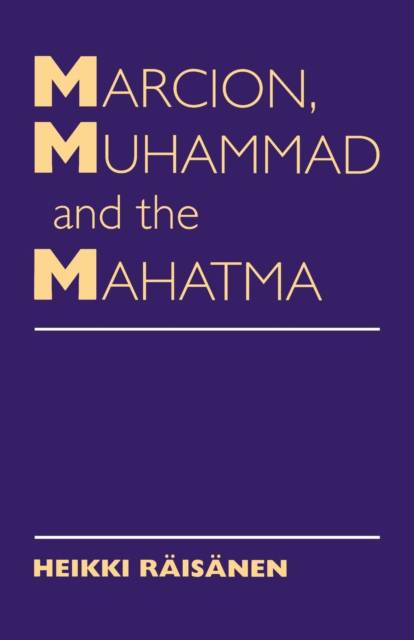
Marcion, Muhammad and Mahatma
Exegetical Perspectives on the Encounter of Cultures and Faith
Heikki Raisanen
Paperback | Engels
€ 27,95
+ 55 punten
Omschrijving
This book, which began as the 1995-96 Edward Cadbury Lectures at the University of Birmingham, argues that our awareness of other cultural and religious traditions has brought with it a new historical consciousness of the relativity of all cultures and that this must inevitably affect our view of scripture. If biblical studies are taken really seriously, traditional ways of using the Bible in theology become unviable. We are inevitably directed towards pluralism. After all, we can now see just how great a diversity there is in the Bible itself, to such a degree as to make exclusivism not only problematical but also morally dubious. So there should be no pressure to agree with this or that biblical strand, but even the freedom to decide against all biblical options if need be. A modern attitude to the New Testament might perhaps resemble the attitude taken by early Christians like Paul to the Old Testament - with the significant difference that the radical reapplication of scripture should take place consciously, and not in a hidden or unreflective manner. This radical argument is worked out through considerations of such varied sources as Paul's Letter to the Romans and Luke-Acts; Marcion; Muhammad; the pioneering biblical scholar Isaac La Peyrere; Joseph Smith; and Mahatma Gandhi. Radical queitions are asked, but the aim is a thoroughly positive one. Could it not be the ultimate goal of the dialogue that Christians should become better Christians, Muslims better Muslims, Hindus better Hindus, humanists better humanists, and so on. And should not each try to help the other to reach this goal?
Specificaties
Betrokkenen
- Auteur(s):
- Uitgeverij:
Inhoud
- Aantal bladzijden:
- 256
- Taal:
- Engels
Eigenschappen
- Productcode (EAN):
- 9780334026938
- Verschijningsdatum:
- 18/10/2012
- Uitvoering:
- Paperback
- Formaat:
- Trade paperback (VS)
- Afmetingen:
- 140 mm x 216 mm
- Gewicht:
- 353 g



Alleen bij Standaard Boekhandel
+ 55 punten op je klantenkaart van Standaard Boekhandel
SOLDEN


Beoordelingen
We publiceren alleen reviews die voldoen aan de voorwaarden voor reviews. Bekijk onze voorwaarden voor reviews.