


- Afhalen na 1 uur in een winkel met voorraad
- Gratis thuislevering in België vanaf € 30
- Ruim aanbod met 7 miljoen producten
- Afhalen na 1 uur in een winkel met voorraad
- Gratis thuislevering in België vanaf € 30
- Ruim aanbod met 7 miljoen producten





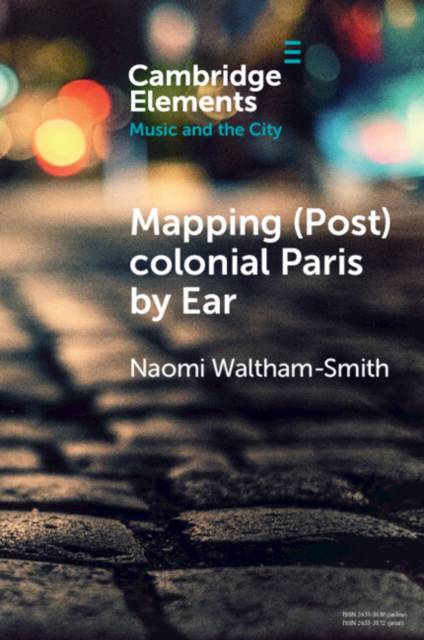
Mapping (Post)Colonial Paris by Ear
Naomi Waltham-Smith
€ 36,45
+ 72 punten
Omschrijving
What does the urban (post)colonial condition sound like? To what extent and how is France's colonial history audible today on the streets, specifically in the Parisian quartiers populaires? Musical and sonic production has long been entangled with social movements in France and her overseas territories, and genres such as hip hop and raï have been closely associated with the urban spaces of Paris's racialized neighborhoods and with political resistance. This Element refines and extends these analyses up to contemporary antiracist and environmental struggles. Its novelty lies in telling these narratives from the perspective of the urban field recordist, reinventing the bourgeois figure of the flâneur as a feminist-decolonial activist and configuring listening as an expressly spatial practice of mapping the city. The discrete binaural microphones tucked in her ears capture everything from Franco-Maghrebi musical dissent through the sounds of police brutality and carceral capitalism to transcolonial reverberations with struggles elsewhere.
Specificaties
Betrokkenen
- Auteur(s):
- Uitgeverij:
Inhoud
- Aantal bladzijden:
- 75
- Taal:
- Engels
- Reeks:
Eigenschappen
- Productcode (EAN):
- 9781009054652
- Verschijningsdatum:
- 6/07/2023
- Uitvoering:
- Paperback
- Formaat:
- Trade paperback (VS)
- Afmetingen:
- 152 mm x 229 mm
- Gewicht:
- 122 g


Alleen bij Standaard Boekhandel
+ 72 punten op je klantenkaart van Standaard Boekhandel
Cadeau

AANGERADEN


Beoordelingen
We publiceren alleen reviews die voldoen aan de voorwaarden voor reviews. Bekijk onze voorwaarden voor reviews.