


- Afhalen na 1 uur in een winkel met voorraad
- Gratis thuislevering in België vanaf € 30
- Ruim aanbod met 7 miljoen producten
- Afhalen na 1 uur in een winkel met voorraad
- Gratis thuislevering in België vanaf € 30
- Ruim aanbod met 7 miljoen producten





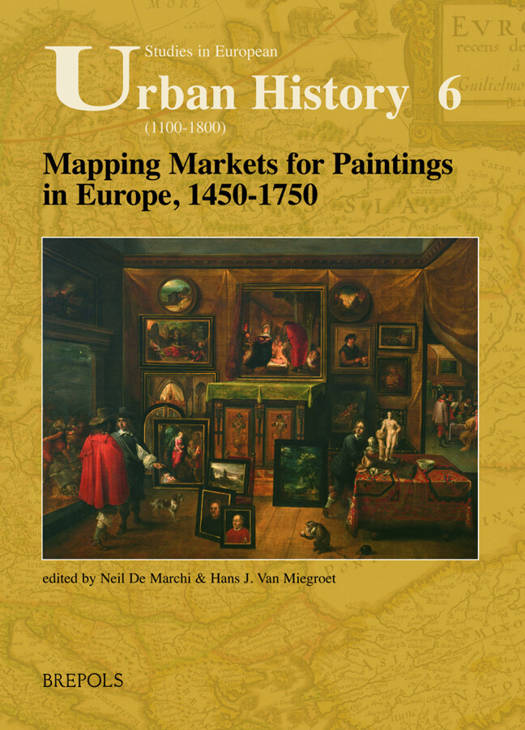
Mapping Markets for Paintings in Europe, 1450-1750
Neil De Marchi
€ 68,90
+ 137 punten
Omschrijving
Over the course of the fifteenth century easel paintings edged out tapestries, frescoes and wood inlay pictures on the walls of private dwellings. Millions of such paintings were produced in the period 1450-1800, in all shapes and sizes, and across the whole range of prices. Who bought them? How were they distributed? What place did they occupy among other luxury possessions? Such questions seem to require that visual culture be treated as an integral part of family spending and commercial pursuits. This volume is the outcome of a four-year collaboration between art historians, economists, social historians and museum professionals from the US, Australia and Europe; its aim was to map the new ground identified by these and related questions, in local contexts, but with comparative and longitudinal concerns constantly in mind. The result is an entirely new matrix of the business and artistic interactions through which visual cultures in early modern Europe were formed. The editors, Neil De Marchi and Hans J. Van Miegroet, an economist and an art historian, have collaborated across their disciplines for ten years. Here they have interspersed participants' essays with brief connecting observations, to produce a text that respects disciplinary expertise while making connections across locations and across time. Much has been written about European paintings; but how markets in paintings emerged, who they served, what roles and institutions were developed that enabled them to function effectively, and how exchange affected visual preferences, have not been studied in such a deliberately wide-angled, comparative way. Mapping Markets is not only a book about paintings, but a compendium of cross-disciplinary methods and insights. It charts the state of research in this trans-disciplinary field, identifies gaps, and poses questions for scholars and students wishing to pursue further the issues raised here.
Specificaties
Betrokkenen
- Auteur(s):
- Uitgeverij:
Inhoud
- Aantal bladzijden:
- 458
- Taal:
- Engels
- Reeks:
- Reeksnummer:
- nr. 6
Eigenschappen
- Productcode (EAN):
- 9782503518305
- Verschijningsdatum:
- 1/04/2006
- Uitvoering:
- Paperback
- Formaat:
- Trade paperback (VS)
- Afmetingen:
- 179 mm x 250 mm
- Gewicht:
- 1233 g


Alleen bij Standaard Boekhandel
+ 137 punten op je klantenkaart van Standaard Boekhandel
Cadeau

AANGERADEN


Beoordelingen
We publiceren alleen reviews die voldoen aan de voorwaarden voor reviews. Bekijk onze voorwaarden voor reviews.