


- Afhalen na 1 uur in een winkel met voorraad
- Gratis thuislevering in België vanaf € 30
- Ruim aanbod met 7 miljoen producten
- Afhalen na 1 uur in een winkel met voorraad
- Gratis thuislevering in België vanaf € 30
- Ruim aanbod met 7 miljoen producten





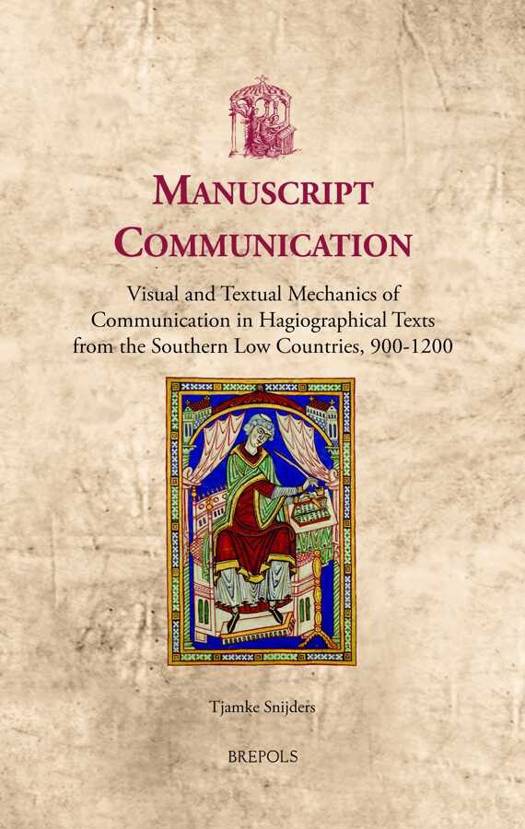
Manuscript Communication
Visual and Textual Mechanics of Communication in Hagiographical Texts from the Southern Low Countries, 900-1200
Tjamke Snijders
€ 137,80
+ 275 punten
Omschrijving
This study investigates how medieval abbeys in the Southern Low Countries used hagiographical manuscripts as a communicative tool. Four basic questions are addressed: How did layout influence a manuscript's communicative potential? Was manuscript communication influenced by its composition? How did the flexibility of texts and manuscripts influence their communicative function? And how did the position of the monastery within the monastic landscape influence manuscript communication? Ranging from in-depth case studies to discussions of structure and agency in manuscript terminology and layout in the aftermath of New Philology, this book argues that the High Middle Ages witnessed a fundamental process of manuscript diversification and specialisation, which was at the basis of the thirteenth-century revolution in manuscript layout. This led twelfth-century monks to start conceptualising the manuscript as an object with fixed contents, which was to be used and copied as a whole. Consequently, the production and spread of saints' lives became part of a process of ideological homogenisation among Benedictine monasteries and started a crucial development in medieval literacy. Awarded the Mgr. Charles De Clercq award from the Royal Flemish Academy of Belgium for Science and the Arts (2012) and the five-yearly Flemish Award for Historical Sciences of the Academische Stichting Leuven (2013).
Specificaties
Betrokkenen
- Auteur(s):
- Uitgeverij:
Inhoud
- Aantal bladzijden:
- 511
- Taal:
- Engels
- Reeks:
- Reeksnummer:
- nr. 32
Eigenschappen
- Productcode (EAN):
- 9782503552941
- Verschijningsdatum:
- 22/12/2014
- Uitvoering:
- Hardcover
- Formaat:
- Genaaid
- Afmetingen:
- 163 mm x 236 mm
- Gewicht:
- 997 g


Alleen bij Standaard Boekhandel
+ 275 punten op je klantenkaart van Standaard Boekhandel
Cadeau

AANGERADEN


Beoordelingen
We publiceren alleen reviews die voldoen aan de voorwaarden voor reviews. Bekijk onze voorwaarden voor reviews.