


- Afhalen na 1 uur in een winkel met voorraad
- Gratis thuislevering in België vanaf € 30
- Ruim aanbod met 7 miljoen producten
- Afhalen na 1 uur in een winkel met voorraad
- Gratis thuislevering in België vanaf € 30
- Ruim aanbod met 7 miljoen producten





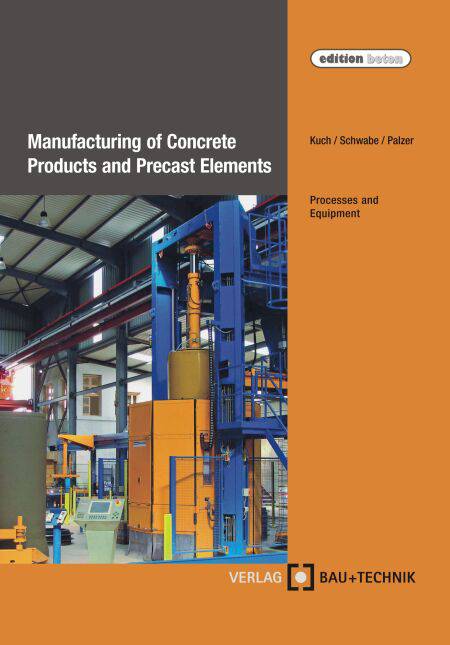
Manufacturing of Concrete Products and Precast Elements E-BOOK
Processes and Equipment
Helmut Kuch, Jörg-Henry Schwabe, Ulrich Palzer
€ 47,99
+ 47 punten
Omschrijving
The flexible use of prefabricated concrete products requires a continuously increasing diversity with regard to fresh concrete mix designs and properties, moulding processes, surface finishes and product characteristics.
This trend imposes ever-higher requirements on manufacturers of the associated production equipment and on precast plants. The main goal is to implement a flexible production system in all processing stages. The relevant correlations and interactions need to be thoroughly considered and evaluated in order to ensure that concrete products and precast elements are manufactured to the required quality standard.
To date, no comprehensive description of these correlations has been published in the relevant literature. This richly illustrated book closes the gap by describing the basic principles of the production processes, the fundamentals of materials, the composition of the concrete mix, and the equipment used for concrete production. Clearly arranged chapters detail the production processes and equipment used to manufacture small concrete products, concrete pipes and manholes, and precast elements.
The authors have used their many years of experience in the field of precast technology and their close ties to the industry. Their aim was to integrate modern testing and calculation methods from neighbouring disciplines into precast technology. This includes, for instance, modelling and simulation of the workability behaviour of mixes, implementation of the latest advancements in machine dynamics to the design and engineering of production equipment, and the use of stateof-the-art measuring and automation technology for quality control purposes.
This trend imposes ever-higher requirements on manufacturers of the associated production equipment and on precast plants. The main goal is to implement a flexible production system in all processing stages. The relevant correlations and interactions need to be thoroughly considered and evaluated in order to ensure that concrete products and precast elements are manufactured to the required quality standard.
To date, no comprehensive description of these correlations has been published in the relevant literature. This richly illustrated book closes the gap by describing the basic principles of the production processes, the fundamentals of materials, the composition of the concrete mix, and the equipment used for concrete production. Clearly arranged chapters detail the production processes and equipment used to manufacture small concrete products, concrete pipes and manholes, and precast elements.
The authors have used their many years of experience in the field of precast technology and their close ties to the industry. Their aim was to integrate modern testing and calculation methods from neighbouring disciplines into precast technology. This includes, for instance, modelling and simulation of the workability behaviour of mixes, implementation of the latest advancements in machine dynamics to the design and engineering of production equipment, and the use of stateof-the-art measuring and automation technology for quality control purposes.
Specificaties
Betrokkenen
- Auteur(s):
- Uitgeverij:
Inhoud
- Aantal bladzijden:
- 267
- Taal:
- Engels
- Reeks:
Eigenschappen
- Productcode (EAN):
- 9783764005382
- Verschijningsdatum:
- 19/03/2013
- Uitvoering:
- E-book
- Beveiligd met:
- Digital watermarking
- Formaat:
- ePub


Alleen bij Standaard Boekhandel
+ 47 punten op je klantenkaart van Standaard Boekhandel
Cadeau

AANGERADEN


Beoordelingen
We publiceren alleen reviews die voldoen aan de voorwaarden voor reviews. Bekijk onze voorwaarden voor reviews.