


- Afhalen na 1 uur in een winkel met voorraad
- Gratis thuislevering in België vanaf € 30
- Ruim aanbod met 7 miljoen producten
- Afhalen na 1 uur in een winkel met voorraad
- Gratis thuislevering in België vanaf € 30
- Ruim aanbod met 7 miljoen producten





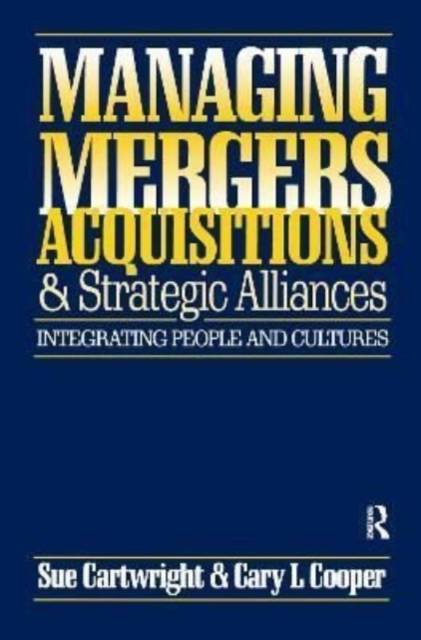
Managing Mergers Acquisitions and Strategic Alliances
Sue Cartwright, Cary L Cooper
Hardcover | Engels
€ 236,95
+ 473 punten
Omschrijving
Mergers, acquisitions, and alliances continue to be almost an everyday feature of the contemporary business scene, yet at least half prove to be unsuccessful. The authors show the contribution that psychology can make to our understanding of the merger phenomena - how it affects organizational performance, and how it affects the managers and employees involved. Mergers, Acquisitions and Strategic Alliances is intended as a guide to successful organizational marriage. Great emphasis is placed on the issue of cultural compatibility as it concerns partner selection, integration practices and venture outcomes. The book also focuses on cross-national mergers, acquisitions and joint ventures. With the increasing economic activity within the European Union and between the unions of other countries, there is a need to know more about the corporate and national cultures in these strategic alliances. The authors have drawn upon an extensive body of research based on recent cases in a wide cross section of industries across Europe. The book is unique in showing the actual effect mergers and acquisitions have on people, and consequently on the performance of the 'new' organization. It will be particularly relevant for decision makers - those who are involved in planning and implementing a large organizational change, and those responsible for ensuring successful integration afterwards. It would also be extremely useful for postgraduate management students, personnel executives and management consultants.
Specificaties
Betrokkenen
- Auteur(s):
- Uitgeverij:
Inhoud
- Aantal bladzijden:
- 256
- Taal:
- Engels
Eigenschappen
- Productcode (EAN):
- 9781138155855
- Verschijningsdatum:
- 7/12/2016
- Uitvoering:
- Hardcover
- Formaat:
- Genaaid
- Afmetingen:
- 156 mm x 233 mm
- Gewicht:
- 452 g



Alleen bij Standaard Boekhandel
+ 473 punten op je klantenkaart van Standaard Boekhandel
Cadeau

AANGERADEN


Beoordelingen
We publiceren alleen reviews die voldoen aan de voorwaarden voor reviews. Bekijk onze voorwaarden voor reviews.