


- Afhalen na 1 uur in een winkel met voorraad
- Gratis thuislevering in België vanaf € 30
- Ruim aanbod met 7 miljoen producten
- Afhalen na 1 uur in een winkel met voorraad
- Gratis thuislevering in België vanaf € 30
- Ruim aanbod met 7 miljoen producten




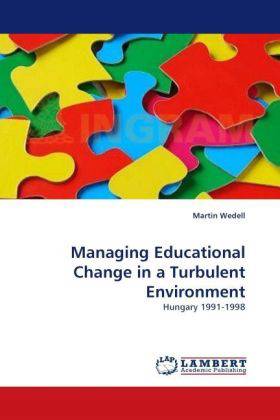
Managing Educational Change in a Turbulent Environment
Hungary 1991-1998
Martin Wedell
Paperback | Engels
€ 77,95
+ 155 punten
Omschrijving
This book presents an in-depth study of an educational change at a time of extreme socio- political adjustment in Hungary during the 1990s. It looks in detail at the change process, and in particular at how the expected outcomes of the change needed to be constantly adjusted over time in response to the ever altering local and wider contexts in which it was situated. It illustrates the wide range of micro and macro factors that influence any change process. These range from the beliefs, feelings and behaviours of the individuals charged with its implementation, to the changes in the wider geo-political environment that affected its funding and continuation. It thus provides a detailed case study of the manner in which one educational institution in Central Europe tried to adapt to the very different social and political realities of the post-communist era. While the experiences detailed are of course unique to the people, time and place within which they are situated, many of the issues raised are potentially of wider relevance to the leadership and management of educational changes in other contexts.
Specificaties
Betrokkenen
- Auteur(s):
- Uitgeverij:
Inhoud
- Aantal bladzijden:
- 348
- Taal:
- Engels
Eigenschappen
- Productcode (EAN):
- 9783838342610
- Verschijningsdatum:
- 25/06/2010
- Uitvoering:
- Paperback
- Afmetingen:
- 152 mm x 229 mm
- Gewicht:
- 508 g


Alleen bij Standaard Boekhandel
+ 155 punten op je klantenkaart van Standaard Boekhandel
CADEAU

AANGERADEN


Beoordelingen
We publiceren alleen reviews die voldoen aan de voorwaarden voor reviews. Bekijk onze voorwaarden voor reviews.