


- Afhalen na 1 uur in een winkel met voorraad
- Gratis thuislevering in België vanaf € 30
- Ruim aanbod met 7 miljoen producten
- Afhalen na 1 uur in een winkel met voorraad
- Gratis thuislevering in België vanaf € 30
- Ruim aanbod met 7 miljoen producten





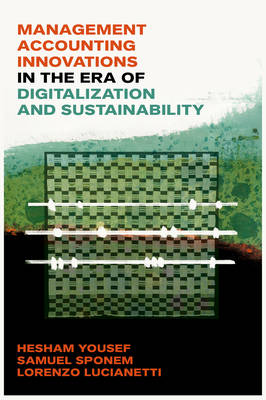
Management Accounting Innovations in the Era of Digitalization and Sustainability
Hesham Yousef, Samuel Sponem, Lorenzo Lucianetti
Hardcover | Engels
€ 169,45
+ 338 punten
Omschrijving
Management accounting has always been a discipline in motion. From its origins in the factories of the Industrial Revolution to today's boardrooms filled with digital dashboards, it has evolved with every wave of change. Yet never before has the field faced challenges as profound as those posed by digital transformation and sustainability. In Management Accounting Innovations in the Era of Digitalization and Sustainability, Hesham Yousef, Samuel Sponem, and Lorenzo Lucianetti tell the story of how management accounting adapts to change. They show that innovations emerge not simply as technical fixes, but as dynamic responses shaped by external pressures, internal drivers, and organizational realities. The authors bring this narrative into the present, illustrating how artificial intelligence, big data, blockchain, and cloud computing are reshaping the tools and functions of accounting, while sustainability is redefining its future as organizations embed environmental, social, and governance concerns at the core of their systems. At its core, this book shows how management accounting is constantly challenged and reimagined to stay relevant in turbulent times. Drawing on history, theory, and practice, the authors argue that its future lies not in rigid tools but in adaptive approaches that help organizations respond to change, seize opportunities, and create value for both business and society--making this an essential read for scholars, practitioners, and students navigating an age of digital disruption and sustainability.
Specificaties
Betrokkenen
- Auteur(s):
- Uitgeverij:
Inhoud
- Aantal bladzijden:
- 192
- Taal:
- Engels
Eigenschappen
- Productcode (EAN):
- 9781835494134
- Verschijningsdatum:
- 23/03/2026
- Uitvoering:
- Hardcover
- Formaat:
- Genaaid
- Afmetingen:
- 152 mm x 229 mm
- Gewicht:
- 426 g


Alleen bij Standaard Boekhandel
+ 338 punten op je klantenkaart van Standaard Boekhandel
Cadeau

AANGERADEN


Beoordelingen
We publiceren alleen reviews die voldoen aan de voorwaarden voor reviews. Bekijk onze voorwaarden voor reviews.