


- Afhalen na 1 uur in een winkel met voorraad
- Gratis thuislevering in België vanaf € 30
- Ruim aanbod met 7 miljoen producten
- Afhalen na 1 uur in een winkel met voorraad
- Gratis thuislevering in België vanaf € 30
- Ruim aanbod met 7 miljoen producten





€ 24,45
+ 48 punten
Omschrijving
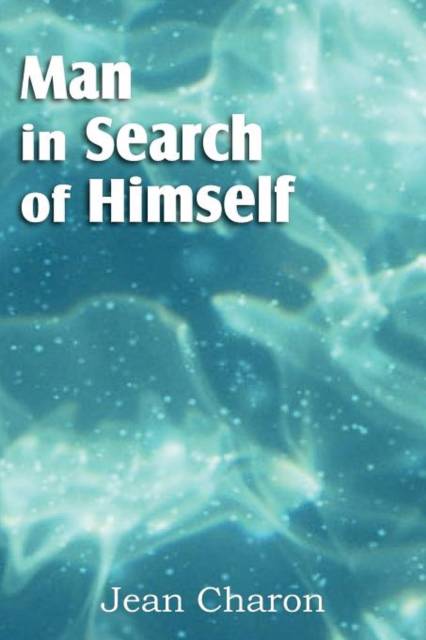
Man, it will be objected, is a living being, and therefore belongs in the first place to the domain of the biologist; but he is also a thinking being, and therefore belongs to the psychologist; in his evolutionary setting, he is the concern of the palaeontologist; but he is also a being capable of philosophizing, capable of artistic and religious feelings, and so comes within the province of the philosopher, the artist, and the theologian. But what on earth is a physicist doing in this company? What does he know about man, since man is not his special field of research? If I must make my apologies for daring to come out of the cave in which I seemed to be confined - my professional pigeon-hole, so to speak - I am more than willing to do so. This book, I admit, is the exact opposite of a specialist work. I admit moreover - even if I am to be condemned on this count - that I am particularly glad my work is not like that of a specialist. Jean Emile Charon was a French nuclear physicist, author of over 20 books on physics, scientific philosophy, and computer science.
Specificaties
Betrokkenen
- Auteur(s):
- Vertaler(s):
- Uitgeverij:
Inhoud
- Aantal bladzijden:
- 186
- Taal:
- Engels
Eigenschappen
- Productcode (EAN):
- 9781612039848
- Verschijningsdatum:
- 1/04/2012
- Uitvoering:
- Paperback
- Formaat:
- Trade paperback (VS)
- Afmetingen:
- 152 mm x 229 mm
- Gewicht:
- 254 g


Alleen bij Standaard Boekhandel
+ 48 punten op je klantenkaart van Standaard Boekhandel
Cadeau

AANGERADEN


Beoordelingen
We publiceren alleen reviews die voldoen aan de voorwaarden voor reviews. Bekijk onze voorwaarden voor reviews.