


- Afhalen na 1 uur in een winkel met voorraad
- Gratis thuislevering in België vanaf € 30
- Ruim aanbod met 7 miljoen producten
- Afhalen na 1 uur in een winkel met voorraad
- Gratis thuislevering in België vanaf € 30
- Ruim aanbod met 7 miljoen producten





Omschrijving
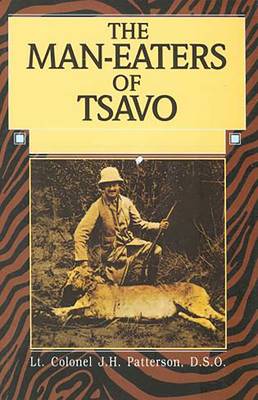
In 1898 John H. Patterson arrived in East Africa with a mission to build a railway bridge over the Tsavo River. Over the course of several weeks Patterson and his mostly Indian workforce were systematically hunted by two man-eating lions . In all, 100 workers were killed, and the entire bridge-building project was delayed. As well as being stalked by lions, Patterson had to guard his back against his own increasingly hostile and mutinous workers as he set out to track and kill the man-eaters.
Patterson's account of the lions' reign of terror and his own attempts to kill them is the stuff of great adventure. Consider this description of the aftermath of an attack by the lions: "...we at once set out to follow the brutes, Mr. Dalgairns feeling confident that he had wounded one of them, as there was a trail on the sand like that of the toes of a broken limb.... we saw in the gloom what we at first took to be a lion cub; closer inspection, however, showed it to be the remains of the unfortunate coolie, which the man-eaters had evidently abandoned at our approach. The legs, one arm and half the body had been eaten, and it was the stiff fingers of the other arm trailing along the sand which had left the marks we had taken to be the trail of a wounded lion...." This classic tale of death, courage, and terror in the African bush is still a page-turner, even after all these years.
Specificaties
Betrokkenen
- Auteur(s):
- Uitgeverij:
Inhoud
- Aantal bladzijden:
- 346
- Taal:
- Engels
Eigenschappen
- Productcode (EAN):
- 9781592281879
- Verschijningsdatum:
- 1/07/2004
- Uitvoering:
- Paperback
- Formaat:
- Trade paperback (VS)
- Afmetingen:
- 138 mm x 215 mm
- Gewicht:
- 458 g


Alleen bij Standaard Boekhandel
+ 52 punten op je klantenkaart van Standaard Boekhandel
AANGERADEN


Beoordelingen
We publiceren alleen reviews die voldoen aan de voorwaarden voor reviews. Bekijk onze voorwaarden voor reviews.