


- Afhalen na 1 uur in een winkel met voorraad
- Gratis thuislevering in België vanaf € 30
- Ruim aanbod met 7 miljoen producten
- Afhalen na 1 uur in een winkel met voorraad
- Gratis thuislevering in België vanaf € 30
- Ruim aanbod met 7 miljoen producten





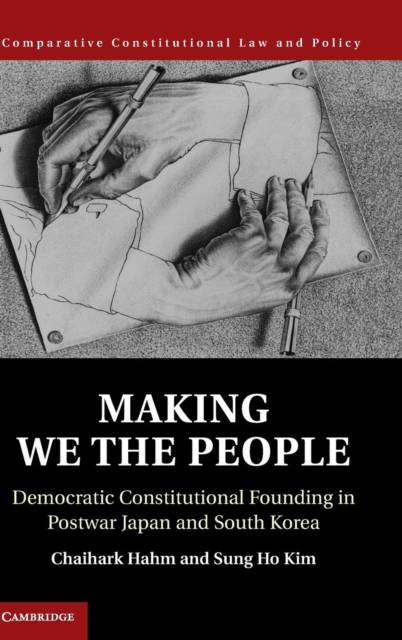
Making We the People
Democratic Constitutional Founding in Postwar Japan and South Korea
Chaihark Hahm, Sung Ho Kim
€ 209,45
+ 418 punten
Eenvoudig bestellen
Veilig betalen


Gratis thuislevering vanaf € 30 (via bpost)
Gratis levering in je Standaard Boekhandel
Omschrijving
What does it mean to say that it is "We the People" who "ordain and establish" a constitution? Who are those sovereign people, and how can they do so? Interweaving history and theory, constitutional scholar Chaihark Hahm and political theorist Sung Ho Kim attempt to answer these perennial questions by revisiting the constitutional politics of postwar Japan and Korea. Together, these experiences demonstrate the infeasibility of the conventional assumption that there is a clearly-bounded sovereign "people" prior to constitution-making which may stand apart from both outside influence and troubled historical legacies. The authors argue that "We the People" only emerges through a deeply transformative politics of constitutional founding and, as such, a democratic constitution and its putative author are mutually constitutive. Highly original and genuinely multidisciplinary, this book will be of interest to scholars of comparative constitutionalism as well as observers of ongoing constitutional debates in Japan and Korea.
Specificaties
Betrokkenen
- Auteur(s):
- Uitgeverij:
Inhoud
- Aantal bladzijden:
- 330
- Taal:
- Engels
- Reeks:
Eigenschappen
- Productcode (EAN):
- 9781107018822
- Verschijningsdatum:
- 10/12/2015
- Uitvoering:
- Hardcover
- Formaat:
- Genaaid
- Afmetingen:
- 152 mm x 229 mm
- Gewicht:
- 607 g



Alleen bij Standaard Boekhandel
+ 418 punten op je klantenkaart van Standaard Boekhandel
CADEAU

AANGERADEN


Beoordelingen
We publiceren alleen reviews die voldoen aan de voorwaarden voor reviews. Bekijk onze voorwaarden voor reviews.