


- Afhalen na 1 uur in een winkel met voorraad
- Gratis thuislevering in België vanaf € 30
- Ruim aanbod met 7 miljoen producten
- Afhalen na 1 uur in een winkel met voorraad
- Gratis thuislevering in België vanaf € 30
- Ruim aanbod met 7 miljoen producten





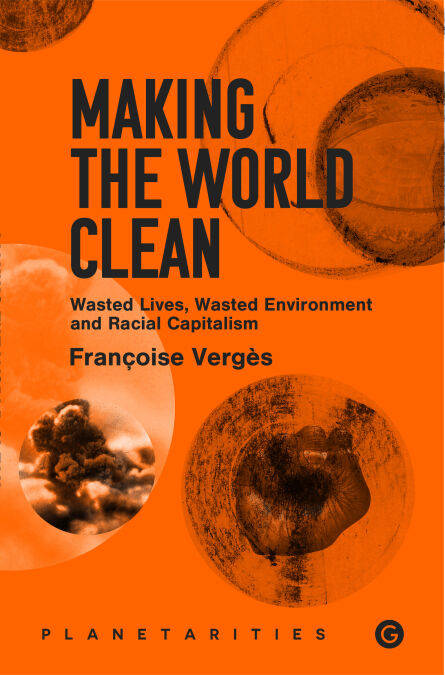
Making the World Clean E-BOOK
Wasted Lives, Wasted Environment, and Racial Capitalism
Francoise Verges
€ 17,69
+ 17 punten
Omschrijving
An antiracist theory of cleaning.
In Making the World Clean: Wasted Lives, Wasted Environment, and Racial Capitalism, Françoise Vergès examines the racial and gendered politics of wasting lands, bodies, and resources and the organized deprivation of clean water, shelter, and access to health services—in other words, the structural denial, along racial lines, of vital needs. Through 38 short sections, she looks at the social relations that have made cleaning into drudgery and into a racialized, gendered, poorly paid job that is nevertheless necessary for any society to function. She concludes with the proposition of a feminist, decolonial, antiracist, anti-patriarchal, and anti-capitalist politics of cleaning. Or, simply put, of “decolonial cleaning.”
To Vergès, the structural denial of the elemental needs of women of color (sanitary pads, access to water, and privacy for basic washing), and why these needs are considered insignificant and trivial, shows how racism and class war are gendered. By examining the banal, the trivial, and the elemental, the author addresses cleaning as a necessity rather than the maintenance of a consumerist lifestyle, a condition of basic care of the body and the mind that is considered with indifference by racial capitalism, white environmentalism, and even, too often, by humanitarian organizations. She argues that by building “life-affirming institutions,” as Ruth Wilson Gilmore advocates, struggles against the whitening of cleaning create sites of freedom. “Decolonial cleaning” imagines cleaning as taking care of land, humans, plants, animals, and rivers, not seeking to discipline them or transform them into commodities or objects of conservation but cleaning as a practice dedicated to sustaining the living world.
In Making the World Clean: Wasted Lives, Wasted Environment, and Racial Capitalism, Françoise Vergès examines the racial and gendered politics of wasting lands, bodies, and resources and the organized deprivation of clean water, shelter, and access to health services—in other words, the structural denial, along racial lines, of vital needs. Through 38 short sections, she looks at the social relations that have made cleaning into drudgery and into a racialized, gendered, poorly paid job that is nevertheless necessary for any society to function. She concludes with the proposition of a feminist, decolonial, antiracist, anti-patriarchal, and anti-capitalist politics of cleaning. Or, simply put, of “decolonial cleaning.”
To Vergès, the structural denial of the elemental needs of women of color (sanitary pads, access to water, and privacy for basic washing), and why these needs are considered insignificant and trivial, shows how racism and class war are gendered. By examining the banal, the trivial, and the elemental, the author addresses cleaning as a necessity rather than the maintenance of a consumerist lifestyle, a condition of basic care of the body and the mind that is considered with indifference by racial capitalism, white environmentalism, and even, too often, by humanitarian organizations. She argues that by building “life-affirming institutions,” as Ruth Wilson Gilmore advocates, struggles against the whitening of cleaning create sites of freedom. “Decolonial cleaning” imagines cleaning as taking care of land, humans, plants, animals, and rivers, not seeking to discipline them or transform them into commodities or objects of conservation but cleaning as a practice dedicated to sustaining the living world.
Specificaties
Betrokkenen
- Auteur(s):
- Uitgeverij:
Inhoud
- Aantal bladzijden:
- 248
- Taal:
- Engels
- Reeks:
Eigenschappen
- Productcode (EAN):
- 9781913380380
- Verschijningsdatum:
- 20/01/2025
- Uitvoering:
- E-book
- Beveiligd met:
- Adobe DRM
- Formaat:
- ePub


Alleen bij Standaard Boekhandel
+ 17 punten op je klantenkaart van Standaard Boekhandel
Cadeau

AANGERADEN


Beoordelingen
We publiceren alleen reviews die voldoen aan de voorwaarden voor reviews. Bekijk onze voorwaarden voor reviews.