


- Afhalen na 1 uur in een winkel met voorraad
- Gratis thuislevering in België vanaf € 30
- Ruim aanbod met 7 miljoen producten
- Afhalen na 1 uur in een winkel met voorraad
- Gratis thuislevering in België vanaf € 30
- Ruim aanbod met 7 miljoen producten





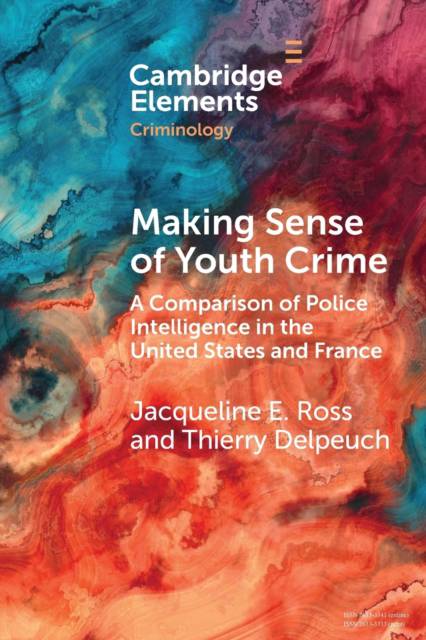
Making Sense of Youth Crime
A Comparison of Police Intelligence in the United States and France
Jacqueline E Ross, Thierry Delpeuch
€ 28,45
+ 56 punten
Omschrijving
This comparative empirical study of policing in the United States and France draws on the authors' ten years of field work to contend that the police in both countries should be thought about as an amalgam of five distinct professional cultures or 'intelligence regimes'-each of which can be found in any given police department in both the United States and France. In particular, we contend that what police do as knowledge workers and how they make sense of the social problems such as collective offending by juveniles varies with the professional subcommunities or 'intelligence regimes' in which their particular knowledge work is embedded. The same problem can be looked at in fundamentally different ways even within a single police department, depending on the intelligence regime through which the problem is refracted.
Specificaties
Betrokkenen
- Auteur(s):
- Uitgeverij:
Inhoud
- Aantal bladzijden:
- 96
- Taal:
- Engels
- Reeks:
Eigenschappen
- Productcode (EAN):
- 9781009364287
- Verschijningsdatum:
- 9/03/2023
- Uitvoering:
- Paperback
- Formaat:
- Trade paperback (VS)
- Afmetingen:
- 152 mm x 229 mm
- Gewicht:
- 140 g


Alleen bij Standaard Boekhandel
+ 56 punten op je klantenkaart van Standaard Boekhandel
Cadeau

AANGERADEN


Beoordelingen
We publiceren alleen reviews die voldoen aan de voorwaarden voor reviews. Bekijk onze voorwaarden voor reviews.