


- Afhalen na 1 uur in een winkel met voorraad
- Gratis thuislevering in België vanaf € 30
- Ruim aanbod met 7 miljoen producten
- Afhalen na 1 uur in een winkel met voorraad
- Gratis thuislevering in België vanaf € 30
- Ruim aanbod met 7 miljoen producten





€ 169,95
+ 339 punten
Omschrijving
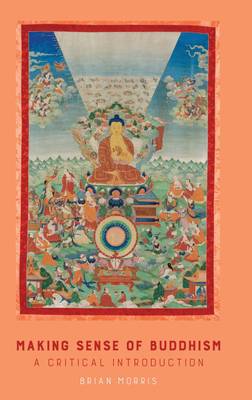
Buddhism is a world religion, a vast and complex social movement and a philosophical tradition with a history spanning over two thousand years. In this volume, Brian Morris follows the Buddha's own 'critical spirit' to provide a thoughtful introduction to this expansive and important topic.
Morris focuses on the formative phase of early Buddhism in northern India, and on five important and widely recognized Buddhist spiritual traditions: Theravada, Mahayana, Tibetan, Zen and Engaged Buddhism. In these accounts, he takes an anthropological perspective that emphasizes cultural diversity, while revealing a shared humanity that enlarges our sense of moral community and places humans 'within nature'. Drawing on classical anthropological portraits of Buddhism as a living tradition, Morris also delves into historical and biographical studies, hermeneutics and political theory. He engages with Buddhist metaphysics and the core teachings through the lens of Western philosophy, but without giving it cognitive priority, and while giving due consideration to cultural contexts. He explores Buddhism's relationship to ecology and ethics, bringing to the discussion his own perspective of an evolutionary naturalist. While seeking to include what is often missing from books on Buddhism, namely the role of women, Morris discusses nuns as 'renouncers' of family life in the quest for spiritual enlightenment and the movement for full ordination.
In this wide-ranging yet accessible book, Brian Morris guides you engagingly across continents, cultures and centuries to a greater understanding of one of the world's most enduring spiritual traditions.
Specificaties
Betrokkenen
- Auteur(s):
- Uitgeverij:
Inhoud
- Aantal bladzijden:
- 394
- Taal:
- Engels
Eigenschappen
- Productcode (EAN):
- 9781912385713
- Verschijningsdatum:
- 30/03/2026
- Uitvoering:
- Hardcover
- Formaat:
- Genaaid
- Afmetingen:
- 156 mm x 234 mm
- Gewicht:
- 725 g


Alleen bij Standaard Boekhandel
+ 339 punten op je klantenkaart van Standaard Boekhandel
Cadeau

AANGERADEN


Beoordelingen
We publiceren alleen reviews die voldoen aan de voorwaarden voor reviews. Bekijk onze voorwaarden voor reviews.