


- Afhalen na 1 uur in een winkel met voorraad
- Gratis thuislevering in België vanaf € 30
- Ruim aanbod met 7 miljoen producten
- Afhalen na 1 uur in een winkel met voorraad
- Gratis thuislevering in België vanaf € 30
- Ruim aanbod met 7 miljoen producten





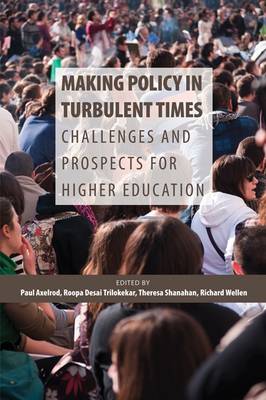
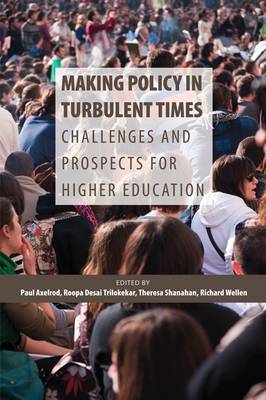
Making Policy in Turbulent Times
Challenges and Prospects for Higher Education
Paul Axelrod, Roopa Trilokekar, Theresa Shanahan, Richard Wellen
€ 62,45
+ 124 punten
Omschrijving
How is policy made in higher education, particularly in the wake of recent economic turbulence? Has policy development converged internationally, and if so, what impact has this had on academic life and institutions? What role does policy-oriented research play in shaping the direction of higher education? Are universities grappling in common ways with issues of access and equity?
Making Policy in Turbulent Times provides a historically informed and nuanced response to these and other questions. Distinguished scholars and administrators from across the globe identify economic challenges and pressures facing universities, compare policy developments in numerous jurisdictions, and demonstrate the ways in which networks and lobbyists achieve results. Cogently argued, Making Policy in Turbulent Times contributes significantly to new research, and will be of great interest to scholars and practitioners alike.Specificaties
Betrokkenen
- Auteur(s):
- Uitgeverij:
Inhoud
- Aantal bladzijden:
- 250
- Taal:
- Engels
- Reeks:
- Reeksnummer:
- nr. 180
Eigenschappen
- Productcode (EAN):
- 9781553393320
- Verschijningsdatum:
- 1/12/2013
- Uitvoering:
- Paperback
- Formaat:
- Trade paperback (VS)
- Afmetingen:
- 152 mm x 226 mm
- Gewicht:
- 703 g


Alleen bij Standaard Boekhandel
+ 124 punten op je klantenkaart van Standaard Boekhandel
Cadeau

AANGERADEN


Beoordelingen
We publiceren alleen reviews die voldoen aan de voorwaarden voor reviews. Bekijk onze voorwaarden voor reviews.