


- Afhalen na 1 uur in een winkel met voorraad
- Gratis thuislevering in België vanaf € 30
- Ruim aanbod met 7 miljoen producten
- Afhalen na 1 uur in een winkel met voorraad
- Gratis thuislevering in België vanaf € 30
- Ruim aanbod met 7 miljoen producten





€ 220,45
+ 440 punten
Omschrijving
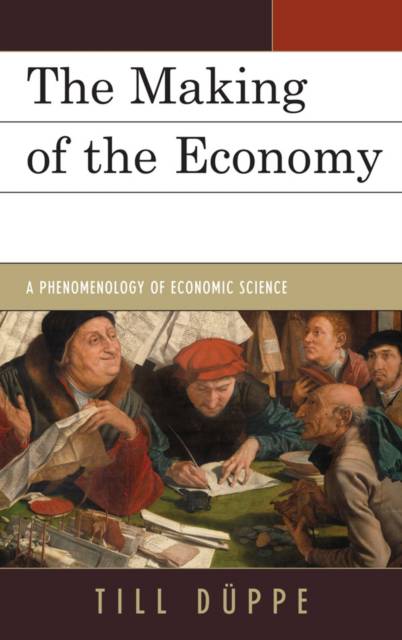
How did modern man come to believe in the object of the economy? What hopes made us accept scientific authority about this illusive thing? What kinds of persons were attracted by objective knowledge in economic discourse? And how does this knowledge guide our economic life? The Making of the Economy tackles such questions surrounding the modern notion of the economy with a fresh look from phenomenological philosophy. In a historical narrative of economic discourses, Till Düppe shows that only due to the scientific culture of economics we speak of an economy. Economic science made the economy. Our economic experiences alone do not trigger an interest in the economy-which makes Husserl's case for the "forgetfulness of the life-world." Düppe's historical narrative focuses on the emergence of formal economic analysis out of a series of successive life-worlds, or concrete historical situations, an approach which generates a new substantive understanding of both the history of economics and the current discourse of crisis surrounding economics. The book will appeal to historians and philosophers of the social sciences, as well as scholars of history, philosophy, and economics.
Specificaties
Betrokkenen
- Auteur(s):
- Uitgeverij:
Inhoud
- Aantal bladzijden:
- 250
- Taal:
- Engels
Eigenschappen
- Productcode (EAN):
- 9780739164198
- Verschijningsdatum:
- 24/10/2011
- Uitvoering:
- Hardcover
- Formaat:
- Ongenaaid / garenloos gebonden
- Afmetingen:
- 155 mm x 231 mm
- Gewicht:
- 498 g


Alleen bij Standaard Boekhandel
+ 440 punten op je klantenkaart van Standaard Boekhandel
Cadeau

AANGERADEN


Beoordelingen
We publiceren alleen reviews die voldoen aan de voorwaarden voor reviews. Bekijk onze voorwaarden voor reviews.