


- Afhalen na 1 uur in een winkel met voorraad
- Gratis thuislevering in België vanaf € 30
- Ruim aanbod met 7 miljoen producten
- Afhalen na 1 uur in een winkel met voorraad
- Gratis thuislevering in België vanaf € 30
- Ruim aanbod met 7 miljoen producten





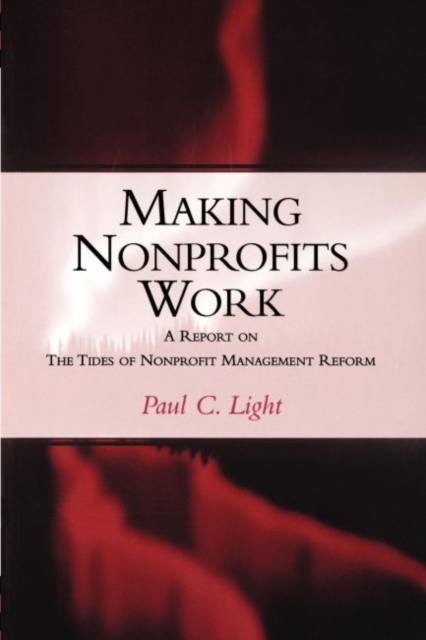
Making Nonprofits Work
A Report on the Tides of Nonprofit Management Reform
Paul C Light
Paperback | Engels
€ 37,45
+ 74 punten
Omschrijving
The nonprofit sector has never been under greater pressure to prove itself. With missions expanding and funding never more competitive, the sector suffers from a general impression that it is less efficient and more wasteful than its government and private competitors. Its funders, be they governments, charitable foundations, or individual givers, have never seemed so insistent about economy and results, while its clients, be they communities or individuals, have never been more demanding about efficiency and responsiveness. How the nonprofit sector does its work is becoming almost as important to funders and clients as what the sector actually delivers by way of goods and services.The problem is that there is virtually no agreement on just how nonprofits can improve. Unlike the federal government, the nonprofit sector is still at the beginning of its reform journey and its networks of consultants, management associations, and scholars are only beginning to develop the research base to know what reforms might work under what conditions. In Making Nonprofits Work, Paul C. Light charts the current trends of management reform in the nonprofit sector and assesses the climate for reform at the local and national levels. Light examines the four popular philosophies, or ""tides,"" being advocated-- scientific management, liberation management, war on waste, and watchful eye--offering examples and caveats from a portfolio of recent experience. Drawing on confidential interviews with leaders in nonprofit management reform, a detailed search of Internet sources, and a survey of state associations of nonprofit organizations, Light's findings suggest that the nonprofit sector has a remarkable opportunity to prevent the excesses and fadism that have dominated reform efforts in government and the private sector. He cautions leaders in the nonprofit sector to recognize the limits of various reform models, to set priorities carefully, and to limit investments of reform energy to a handful of priorities. Finally, he urges reformers to boost the sector's ability to implement new systems and reforms by focusing more closely on capacity building.
Specificaties
Betrokkenen
- Auteur(s):
- Uitgeverij:
Inhoud
- Aantal bladzijden:
- 128
- Taal:
- Engels
Eigenschappen
- Productcode (EAN):
- 9780815752455
- Verschijningsdatum:
- 1/03/2000
- Uitvoering:
- Paperback
- Formaat:
- Trade paperback (VS)
- Afmetingen:
- 152 mm x 230 mm
- Gewicht:
- 190 g



Alleen bij Standaard Boekhandel
+ 74 punten op je klantenkaart van Standaard Boekhandel
Cadeau

AANGERADEN


Beoordelingen
We publiceren alleen reviews die voldoen aan de voorwaarden voor reviews. Bekijk onze voorwaarden voor reviews.