


- Afhalen na 1 uur in een winkel met voorraad
- Gratis thuislevering in België vanaf € 30
- Ruim aanbod met 7 miljoen producten
- Afhalen na 1 uur in een winkel met voorraad
- Gratis thuislevering in België vanaf € 30
- Ruim aanbod met 7 miljoen producten





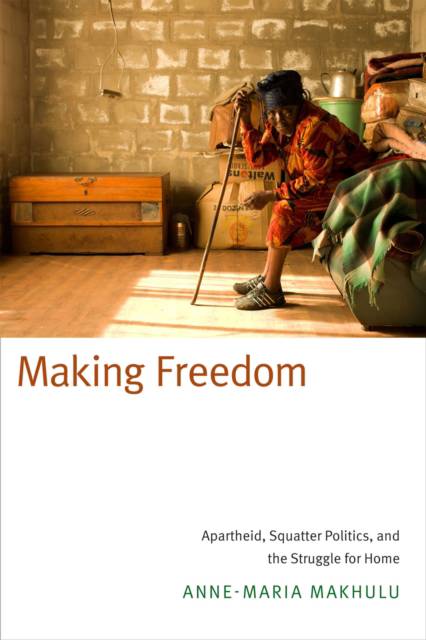
Making Freedom
Apartheid, Squatter Politics, and the Struggle for Home
Anne-Maria Makhulu
Hardcover | Engels
€ 172,45
+ 344 punten
Uitvoering
Omschrijving
In Making Freedom Anne-Maria Makhulu explores practices of squatting and illegal settlement on the outskirts of Cape Town during and immediately following the end of apartheid. Apartheid's paradoxical policies of prohibiting migrant Africans who worked in Cape Town from living permanently within the city led some black families to seek safe haven on the city's perimeters. Beginning in the 1970s families set up makeshift tents and shacks and built whole communities, defying the state through what Makhulu calls a "politics of presence." In the simple act of building homes, squatters, who Makhulu characterizes as urban militants, actively engaged in a politics of "the right to the city" that became vital in the broader struggles for liberation. Despite apartheid's end in 1994, Cape Town's settlements have expanded, as new forms of dispossession associated with South African neoliberalism perpetuate relations of spatial exclusion, poverty, and racism. As Makhulu demonstrates, the efforts of black Capetonians to establish claims to a place in the city not only decisively reshaped Cape Town's geography but changed the course of history.
Specificaties
Betrokkenen
- Auteur(s):
- Uitgeverij:
Inhoud
- Aantal bladzijden:
- 256
- Taal:
- Engels
Eigenschappen
- Productcode (EAN):
- 9780822359470
- Verschijningsdatum:
- 23/10/2015
- Uitvoering:
- Hardcover
- Formaat:
- Genaaid
- Afmetingen:
- 157 mm x 234 mm
- Gewicht:
- 498 g


Alleen bij Standaard Boekhandel
+ 344 punten op je klantenkaart van Standaard Boekhandel
CADEAU

AANGERADEN


Beoordelingen
We publiceren alleen reviews die voldoen aan de voorwaarden voor reviews. Bekijk onze voorwaarden voor reviews.