


- Afhalen na 1 uur in een winkel met voorraad
- Gratis thuislevering in België vanaf € 30
- Ruim aanbod met 7 miljoen producten
- Afhalen na 1 uur in een winkel met voorraad
- Gratis thuislevering in België vanaf € 30
- Ruim aanbod met 7 miljoen producten





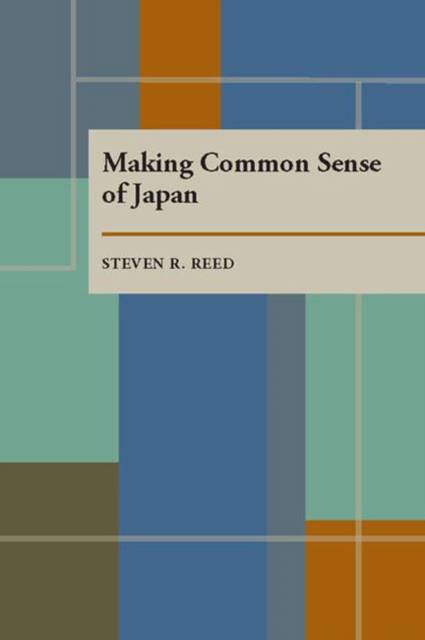
Making Common Sense of Japan
Steven Reed
€ 83,95
+ 167 punten
Omschrijving
Common misconceptions about Japan begin with the notion that it is a \u201csmall\u201d country (it's actually lager than Great Britain, Germany or Italy) and end with pronouncements that the Japanese think differently and have different values-they do things differently because that's the way they are. Steven Reed takes on the task of demystifying Japanese culture and behavior. Through examples that are familiar to an American audience and his own personal encounters with the Japanese, he argues that the apparent oddity of Japanese behavior flows quite naturally from certain objective conditions that are different from those in the United States. Mystical allegations about national character are less useful for understanding a foreign culture than a close look at specific situations and conditions. Two aspects of the Japanese economy have particularly baffled Americans: that Japanese workers have \u201cpermanent employment\u201d and that the Japanese government cooperates with big business. Reed explains these phenomena in common sense terms. He shows how they developed historically, why they continue, and why they helped produce economic growth. He concludes that these practices are not as different from what happens in the United States as they may appear.
Specificaties
Betrokkenen
- Auteur(s):
- Uitgeverij:
Inhoud
- Aantal bladzijden:
- 200
- Taal:
- Engels
- Reeks:
Eigenschappen
- Productcode (EAN):
- 9780822955108
- Verschijningsdatum:
- 15/10/1993
- Uitvoering:
- Paperback
- Formaat:
- Trade paperback (VS)
- Afmetingen:
- 140 mm x 215 mm
- Gewicht:
- 249 g


Alleen bij Standaard Boekhandel
+ 167 punten op je klantenkaart van Standaard Boekhandel
Cadeau

AANGERADEN


Beoordelingen
We publiceren alleen reviews die voldoen aan de voorwaarden voor reviews. Bekijk onze voorwaarden voor reviews.