


- Afhalen na 1 uur in een winkel met voorraad
- Gratis thuislevering in België vanaf € 30
- Ruim aanbod met 7 miljoen producten
- Afhalen na 1 uur in een winkel met voorraad
- Gratis thuislevering in België vanaf € 30
- Ruim aanbod met 7 miljoen producten





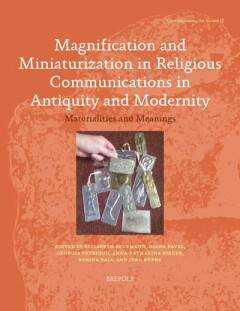
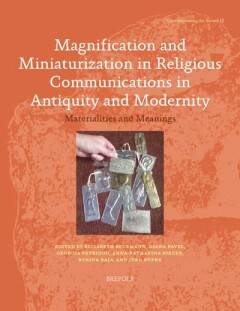
Magnification and Miniaturization in Religious Communication in Antiquity and Modernity
Materialities and Meanings
Elisabeth Begemann
€ 116,60
+ 233 punten
Omschrijving
Human agents might not be the measure of all things. Nonetheless, human bodies, and their bodily dimensions, often are, with size impacting on the ways in which we conceive of, interact with, and relate to the world around us. The scaling up or down of features - magnification and miniaturization - is particularly evident in the creation of anthropogenic items intended for use in religious ritual, and here sizing can be employed as a deliberate strategy to encourage shock and awe, admiration and deterrence, among spectators. Taking as its starting point the concept of 'materialities and meanings', this volume explores how human perceptions and understanding of magnified and miniaturized forms and structures are shaped and changed, both synchronically and diachronically, by our understanding of the human body and its size, and the impact that this has in our relationship with the wider world in the context of ritual practices. The chapters collected here consider a range of questions, from a discussion on the essentials of magnification or miniaturization to an exploration of the impact of such strategies on humans and their wider socio-political ramifications. Together, these chapters contribute to a unique discussion that offers new insights into 'materialities and meanings', the creation of items for ritual, and the ways in which they influence human perception and understanding.
Specificaties
Betrokkenen
- Auteur(s):
- Uitgeverij:
Inhoud
- Aantal bladzijden:
- 230
- Taal:
- Engels
- Reeks:
- Reeksnummer:
- nr. 12
Eigenschappen
- Productcode (EAN):
- 9782503604794
- Verschijningsdatum:
- 9/11/2023
- Uitvoering:
- Paperback
- Formaat:
- Trade paperback (VS)
- Gewicht:
- 362 g


Alleen bij Standaard Boekhandel
+ 233 punten op je klantenkaart van Standaard Boekhandel
Cadeau

AANGERADEN


Beoordelingen
We publiceren alleen reviews die voldoen aan de voorwaarden voor reviews. Bekijk onze voorwaarden voor reviews.