


- Afhalen na 1 uur in een winkel met voorraad
- Gratis thuislevering in België vanaf € 30
- Ruim aanbod met 7 miljoen producten
- Afhalen na 1 uur in een winkel met voorraad
- Gratis thuislevering in België vanaf € 30
- Ruim aanbod met 7 miljoen producten





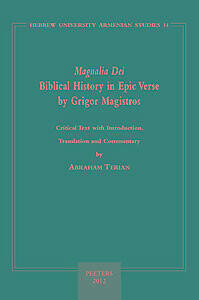
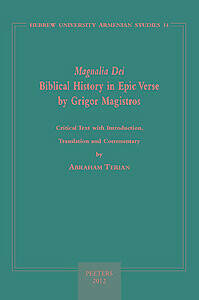
Magnalia Dei. Biblical History in Epic Verse by Grigor Magistros (the First Literary Epic in Medieval Armenian)
Critical Text, with Introduction, Translation, and Commentary
A Terian
€ 49,00
+ 98 punten
Eenvoudig bestellen
Veilig betalen


Gratis thuislevering vanaf € 30 (via bpost)
Gratis levering in je Standaard Boekhandel
Omschrijving
Composed by Grigor Magistros, an 11th-century Armenian princely savant and friend of the Byzantine Emperor Constantine IX Monomachus (reigned 1042-55), the Magnalia Dei is a summation of the Bible in epic verse. Written on one of the author's visits to Constantinople, it resulted from an encounter there with a Moslem intellectual by the name of Manazi - none other than Abu Nasr al-Manazi, vizier and emissary of the Abbasid Caliphate, theologian and poet, who frequently visited Constantinople in quest of Greek scientific manuscripts. During their discussion on the Bible and the Qur'an, a stock Islamic argument emerged: that the Qur'an is superior to the Christian Scriptures on account of its beautiful, inimitable verse. The epic is Magistros's response. The Magnalia Dei is the earliest literary epic in medieval Armenian, and one of the most informative compositions within the genre of biblically inspired verse narratives in Christian literature.
Specificaties
Betrokkenen
- Auteur(s):
- Uitgeverij:
Inhoud
- Aantal bladzijden:
- 209
- Taal:
- Engels
- Reeks:
- Reeksnummer:
- nr. 14
Eigenschappen
- Productcode (EAN):
- 9789042925076
- Verschijningsdatum:
- 3/10/2012
- Uitvoering:
- Paperback
- Formaat:
- Trade paperback (VS)
- Afmetingen:
- 160 mm x 239 mm
- Gewicht:
- 340 g


Alleen bij Standaard Boekhandel
+ 98 punten op je klantenkaart van Standaard Boekhandel
CADEAU

AANGERADEN


Beoordelingen
We publiceren alleen reviews die voldoen aan de voorwaarden voor reviews. Bekijk onze voorwaarden voor reviews.