


- Afhalen na 1 uur in een winkel met voorraad
- Gratis thuislevering in België vanaf € 30
- Ruim aanbod met 7 miljoen producten
- Afhalen na 1 uur in een winkel met voorraad
- Gratis thuislevering in België vanaf € 30
- Ruim aanbod met 7 miljoen producten





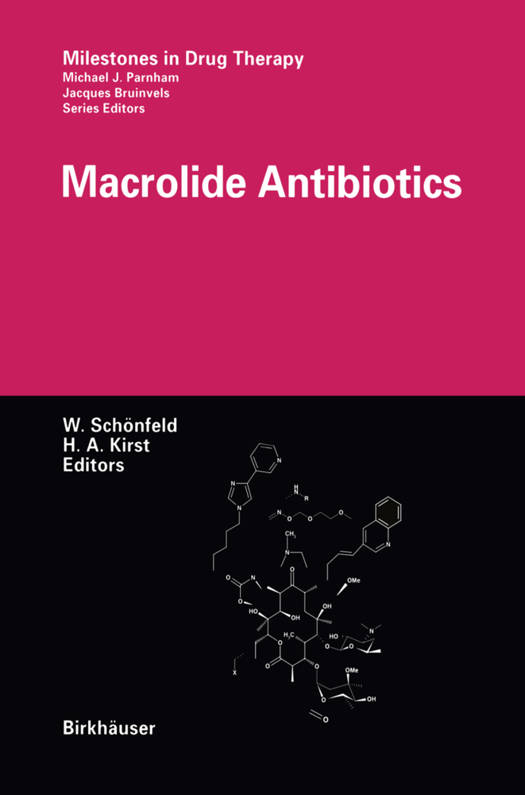
Macrolide Antibiotics
€ 160,45
+ 320 punten
Omschrijving
There are only very few chemical classes of antibiotics in medical use, and these have originated over a span of more than 60 years of research. Almost half a century ago, the first member of the macrolides, erythromycin, was introduced as a treatment option for bacterial infections. Erythromycin is a very complex fermentation product obtained from the soil bacterium Saccharopolyspora ery- thraea (originally named Streptomyces erythreus). The success of erythromycin, based on its efficacy and tolerability, stimulated researchers throughout the world to undertake intense efforts to understand the biology and chemistry of macrolides and to use this experience to improve the properties of this compound class. The second generation of macrolides, based on chemical modifications of erythromy- cin, is currently being in broad use, especially for treatment of respiratory tract infections. We presently foresee the introduction of a new generation of macro- lides, i. e. the ketolides, which have the potential to overcome rising resistance problems. This monograph is intended to give the interested reader an overview on "macrolide experience", covering important areas from basic research to clinical use. Starting from a historic overview, the essential basic parameters - efficacy, pharmacokinetics, pharmacodynamics, and pharmacology - are highlighted in order to introduce the reader to the rationale for clinical use of macrolides. The following group of chapters cover the complex chemistry of the macro- lactone structures, giving historic background, basic structure-activity relation- ships of various derivatization strategies, and perspectives for future discovery of new semisynthetic macrolide antibiotics.
Specificaties
Betrokkenen
- Uitgeverij:
Inhoud
- Aantal bladzijden:
- 323
- Taal:
- Engels
- Reeks:
Eigenschappen
- Productcode (EAN):
- 9783764361860
- Verschijningsdatum:
- 01/03/2002
- Uitvoering:
- Hardcover
- Formaat:
- Genaaid
- Afmetingen:
- 156 mm x 234 mm
- Gewicht:
- 644 g

Alleen bij Standaard Boekhandel
+ 320 punten op je klantenkaart van Standaard Boekhandel
Cadeau

AANGERADEN


Beoordelingen
We publiceren alleen reviews die voldoen aan de voorwaarden voor reviews. Bekijk onze voorwaarden voor reviews.