



Bedankt voor het vertrouwen het afgelopen jaar! Om jou te bedanken bieden we GRATIS verzending (in België) aan op alles gedurende de hele maand januari.
- Afhalen na 1 uur in een winkel met voorraad
- In januari gratis thuislevering in België
- Ruim aanbod met 7 miljoen producten
Bedankt voor het vertrouwen het afgelopen jaar! Om jou te bedanken bieden we GRATIS verzending (in België) aan op alles gedurende de hele maand januari.
- Afhalen na 1 uur in een winkel met voorraad
- In januari gratis thuislevering in België
- Ruim aanbod met 7 miljoen producten





Omschrijving
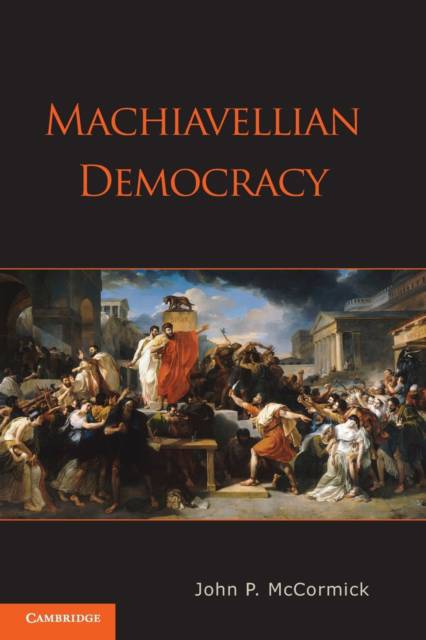
Intensifying economic and political inequality poses a dangerous threat to the liberty of democratic citizens. Mounting evidence suggests that economic power, not popular will, determines public policy, and that elections consistently fail to keep public officials accountable to the people. John P. McCormick confronts this dire situation through a dramatic reinterpretation of Niccolò Machiavelli's political thought. Highlighting previously neglected democratic strains in Machiavelli's major writings, McCormick excavates institutions through which the common people of ancient, medieval, and Renaissance republics constrained the power of wealthy citizens and public magistrates, and he imagines how such institutions might be revived today. Machiavellian Democracy fundamentally reassesses one of the central figures in the Western political canon and decisively intervenes into current debates over institutional design and democratic reform. Inspired by Machiavelli's thoughts on economic class, political accountability and popular empowerment, McCormick proposes a citizen body that excludes socioeconomic and political elites and grants randomly selected common people significant veto, legislative, and censure authority within government and over public officials.
Specificaties
Betrokkenen
- Auteur(s):
- Uitgeverij:
Inhoud
- Aantal bladzijden:
- 266
- Taal:
- Engels
Eigenschappen
- Productcode (EAN):
- 9780521530903
- Verschijningsdatum:
- 31/01/2011
- Uitvoering:
- Paperback
- Formaat:
- Trade paperback (VS)
- Afmetingen:
- 155 mm x 231 mm
- Gewicht:
- 362 g



Alleen bij Standaard Boekhandel
+ 83 punten op je klantenkaart van Standaard Boekhandel
SOLDEN


Beoordelingen
We publiceren alleen reviews die voldoen aan de voorwaarden voor reviews. Bekijk onze voorwaarden voor reviews.