



Bedankt voor het vertrouwen het afgelopen jaar! Om jou te bedanken bieden we GRATIS verzending (in België) aan op alles gedurende de hele maand januari.
- Afhalen na 1 uur in een winkel met voorraad
- In januari gratis thuislevering in België
- Ruim aanbod met 7 miljoen producten
Bedankt voor het vertrouwen het afgelopen jaar! Om jou te bedanken bieden we GRATIS verzending (in België) aan op alles gedurende de hele maand januari.
- Afhalen na 1 uur in een winkel met voorraad
- In januari gratis thuislevering in België
- Ruim aanbod met 7 miljoen producten





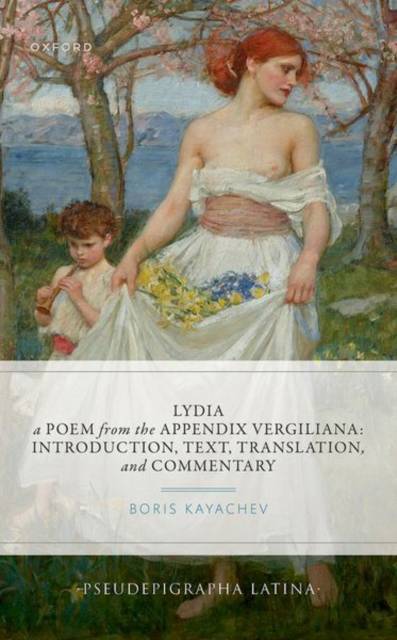
Lydia, a Poem from the Appendix Vergiliana
Introduction, Text, Translation, and Commentary
€ 290,45
+ 580 punten
Omschrijving
This volume offers the first comprehensive literary and philological commentary on the Lydia, in any language. At its core is a freshly edited Latin text of the poem, which systematically reconsiders the paradosis as well as earlier textual scholarship and endorses numerous improvements against current editions. Besides scrutinizing all the textual problems and adopted solutions, the commentary provides a thorough linguistic exegesis of the text as well as a wide-ranging discussion of the poem's rich intertextuality, both Latin and Greek. The Lydia's literary side is also the main focus in the introduction, which challenges the established communis opinio that views the Lydia as a dateless anonymous imitation of Virgilian bucolic, by situating it in the literary context of the Late Republic: it highlights, for the first time, the centrality of Greek bucolic, in particular of Bion's Lament for Adonis and the anonymous Lament for Bion, in the Lydia's literary genealogy and tentatively revives the old attribution to Valerius Cato, as well as exploring the poem's relationship with its better-known sibling, the Dirae. The work is complete with an English translation, aimed to serve as a guide to the Latin text for readers without a solid background in the ancient language.
Specificaties
Betrokkenen
- Uitgeverij:
Inhoud
- Aantal bladzijden:
- 180
- Taal:
- Engels
- Reeks:
Eigenschappen
- Productcode (EAN):
- 9780192874511
- Verschijningsdatum:
- 28/02/2024
- Uitvoering:
- Hardcover
- Formaat:
- Genaaid
- Afmetingen:
- 137 mm x 208 mm
- Gewicht:
- 340 g


Alleen bij Standaard Boekhandel
+ 580 punten op je klantenkaart van Standaard Boekhandel
SOLDEN


Beoordelingen
We publiceren alleen reviews die voldoen aan de voorwaarden voor reviews. Bekijk onze voorwaarden voor reviews.