



Bedankt voor het vertrouwen het afgelopen jaar! Om jou te bedanken bieden we GRATIS verzending (in België) aan op alles gedurende de hele maand januari.
- Afhalen na 1 uur in een winkel met voorraad
- In januari gratis thuislevering in België
- Ruim aanbod met 7 miljoen producten
Bedankt voor het vertrouwen het afgelopen jaar! Om jou te bedanken bieden we GRATIS verzending (in België) aan op alles gedurende de hele maand januari.
- Afhalen na 1 uur in een winkel met voorraad
- In januari gratis thuislevering in België
- Ruim aanbod met 7 miljoen producten





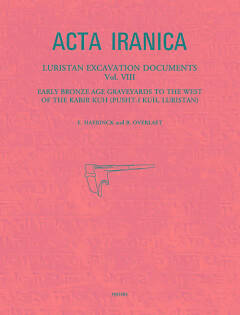
Luristan Excavation Documents Vol. VIII
Early Bronze Age Graveyards to the West of the Kabir Kuh (Pusht-I Kuh, Luristan)
E Haerinck, B Overlaet
€ 222,45
+ 444 punten
Omschrijving
This volume is the final report on the 1965-1979 excavations by Ghent University and the Royal Museums of Art and History, Brussels, in sub-region I, the most western part of Pusht-i Kuh in Luristan (W-Iran), which is the closest to Mesopotamia. The volume is divided into two parts. The first part discusses tombs at nine sites from the Early Bronze Age I to III period (early and middle third millennium B.C.). Most of these were collective tombs; some of them were even re-used in later periods. Two Sasanian interments with exceptional burial goods are also documented. The second part of the book deals with tombs from the late third and the early second millennium (Early Bronze Age IV), or the so called Gutian-tombs. These small individual tombs were documented at six sites. Usually they have three walls only, but occasional reuse of earlier tombs was attested as well. Burial goods include plain and painted pottery, metal weapons and utensils, seals and personal ornaments, some of it of Mesopotamian origin or at least related to it. All the finds are illustrated in line drawings, with the tombs and most objects also in photographs. Metal analyses of objects were performed and the results are included in the volume.
Specificaties
Betrokkenen
- Auteur(s):
- Uitgeverij:
Inhoud
- Aantal bladzijden:
- 241
- Taal:
- Engels
- Reeks:
- Reeksnummer:
- nr. 50
Eigenschappen
- Productcode (EAN):
- 9789042922747
- Verschijningsdatum:
- 16/04/2010
- Uitvoering:
- Hardcover
- Formaat:
- Genaaid
- Gewicht:
- 702 g


Alleen bij Standaard Boekhandel
+ 444 punten op je klantenkaart van Standaard Boekhandel
SOLDEN


Beoordelingen
We publiceren alleen reviews die voldoen aan de voorwaarden voor reviews. Bekijk onze voorwaarden voor reviews.