



Bedankt voor het vertrouwen het afgelopen jaar! Om jou te bedanken bieden we GRATIS verzending (in België) aan op alles gedurende de hele maand januari.
- Afhalen na 1 uur in een winkel met voorraad
- In januari gratis thuislevering in België
- Ruim aanbod met 7 miljoen producten
Bedankt voor het vertrouwen het afgelopen jaar! Om jou te bedanken bieden we GRATIS verzending (in België) aan op alles gedurende de hele maand januari.
- Afhalen na 1 uur in een winkel met voorraad
- In januari gratis thuislevering in België
- Ruim aanbod met 7 miljoen producten





Omschrijving
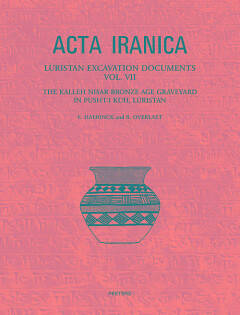
This volume is the final report on the 1967-1968 excavations at Kalleh Nisar in Pusht-i Kuh Luristan, Iran, by Ghent University and the Royal Museums of Art and History, Brussels. A large number of tombs, constructed with stone boulders, and remains of 2 buildings were discovered. One of these buildings is of Chalcolithic date. Individual and collective tombs were constructed at Kalleh Nisar throughout the 3rd millennium. Corridor-shaped tombs of up to 13m in length were designed as collective tombs and were used by several generations. Some were still re-used in the second millennium. The burial goods include plain and painted pottery, metal weapons and utensils, seals and jewellery. The finds cover the whole third and the first half of the second millennium. Bani Surmah is located in sub-region I of the Pusht-i Kuh, which is the closest to Mesopotamia. This explains the imports and influence of Mesopotamia in this part of Luristan. Metal analysis has nevertheless indicated the existence of a local metal production. The way of life and subsistence of past population groups in Pusht-i Kuh are considered. All the finds are illustrated in line drawings, the tombs and most objects also in photo.
Specificaties
Betrokkenen
- Auteur(s):
- Uitgeverij:
Inhoud
- Aantal bladzijden:
- 224
- Taal:
- Engels
- Reeks:
- Reeksnummer:
- nr. 46
Eigenschappen
- Productcode (EAN):
- 9789042919952
- Verschijningsdatum:
- 10/04/2008
- Uitvoering:
- Hardcover
- Formaat:
- Genaaid
- Gewicht:
- 1418 g


Alleen bij Standaard Boekhandel
+ 444 punten op je klantenkaart van Standaard Boekhandel
SOLDEN


Beoordelingen
We publiceren alleen reviews die voldoen aan de voorwaarden voor reviews. Bekijk onze voorwaarden voor reviews.