


- Afhalen na 1 uur in een winkel met voorraad
- Gratis thuislevering in België vanaf € 30
- Ruim aanbod met 7 miljoen producten
- Afhalen na 1 uur in een winkel met voorraad
- Gratis thuislevering in België vanaf € 30
- Ruim aanbod met 7 miljoen producten





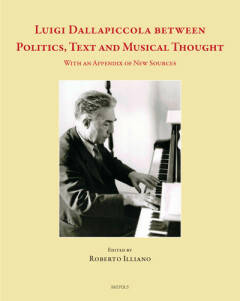
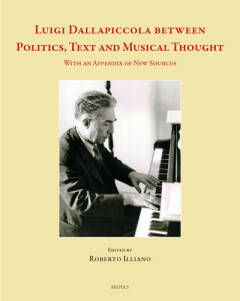
Luigi Dallapiccola Between Politics, Text and Musical Thought
With an Appendix of New Sources
€ 116,60
+ 233 punten
Omschrijving
Luigi Dallapiccola represents one of the most important Italian composers of the twentieth century. Born in Pazin, on the border between three frontiers, he experienced a certain multiculturalism from a young age that led him to take an interest in the new musical languages that were flourishing. Approaching the music of Schoenberg, from the 1930s he began his natural inclination toward twelve-tone music, which he developed fully after the 1950s. After 1950, the composer sought to bring his work into a principle of structural unity and stylistic uniformity, directing himself "toward patient clarification, toward sensibility, not theory". This volume offers essays on Dallapiccola's mature works, from the 1940s through to the 1970s, including the so-called 'protest music' works (Canti di prigionia, Prigioniero and Canti di liberazione), with analyses related to text, timbre and compositional process. In addition, the volume is enriched by an important section of musical and documentary sources, reproducing letters from and to Dallapiccola, as well as musical autographs, sketches, and quotations from works such as "Sex Carmina Alcaei", "Il prigioniero", "Canti di liberazione", and "Ulisse".
Specificaties
Betrokkenen
- Uitgeverij:
Inhoud
- Aantal bladzijden:
- 354
- Taal:
- Engels
- Reeks:
- Reeksnummer:
- nr. 11
Eigenschappen
- Productcode (EAN):
- 9782503615677
- Verschijningsdatum:
- 6/03/2025
- Uitvoering:
- Hardcover
- Formaat:
- Genaaid
- Gewicht:
- 331 g

Alleen bij Standaard Boekhandel
+ 233 punten op je klantenkaart van Standaard Boekhandel
Cadeau

AANGERADEN


Beoordelingen
We publiceren alleen reviews die voldoen aan de voorwaarden voor reviews. Bekijk onze voorwaarden voor reviews.