


- Afhalen na 1 uur in een winkel met voorraad
- Gratis thuislevering in België vanaf € 30
- Ruim aanbod met 7 miljoen producten
- Afhalen na 1 uur in een winkel met voorraad
- Gratis thuislevering in België vanaf € 30
- Ruim aanbod met 7 miljoen producten





€ 271,45
+ 542 punten
Uitvoering
Omschrijving
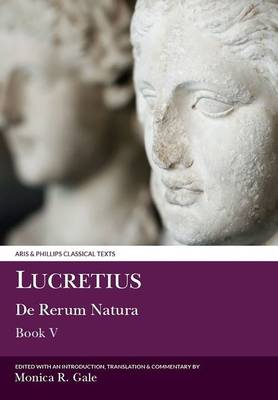
For a work written more than two thousand years ago, in a society in many ways quite alien to our own, Lucretius' De Rerum Natura contains much of striking, even startling, contemporary relevance. This is true, above all, of the fifth book, which begins by putting a strong case against what it has recently become fashionable to call 'intelligent design', and ends with an account of human evolution and the development of society in which the limitations of technological progress form a strong and occasionally explicit subtext. Along the way, the poet touches on many themes which may strike a chord with the twenty-first century reader: the fragility of our ecosystem, the corruption of political life, the futility of consumerism and the desirability of limiting our acquisitive instincts are all highly topical issues for us, as for the poem's original audience. Book V also offers a fascinating introduction to the world-view of the upper-class Roman of the first century BC. This edition (which complements existing Aris and Phillips commentaries on books 3, 4 and 6) will help to make Lucretius' urgent and impassioned argument, and something of his remarkable poetic style, accessible to a wider audience, including those with little or no knowledge of Latin. Both the translation and commentary aim to explain the scientific argument of the book as clearly as possible; and to convey at least some impression of the poetic texture of Lucretius' Latin.
Specificaties
Betrokkenen
- Auteur(s):
- Uitgeverij:
Inhoud
- Aantal bladzijden:
- 200
- Taal:
- Engels
- Reeks:
Eigenschappen
- Productcode (EAN):
- 9780856688843
- Verschijningsdatum:
- 1/11/2008
- Uitvoering:
- Hardcover
- Formaat:
- Genaaid
- Afmetingen:
- 150 mm x 213 mm
- Gewicht:
- 430 g


Alleen bij Standaard Boekhandel
+ 542 punten op je klantenkaart van Standaard Boekhandel
CADEAU

AANGERADEN


Beoordelingen
We publiceren alleen reviews die voldoen aan de voorwaarden voor reviews. Bekijk onze voorwaarden voor reviews.