


- Afhalen na 1 uur in een winkel met voorraad
- Gratis thuislevering in België vanaf € 30
- Ruim aanbod met 7 miljoen producten
- Afhalen na 1 uur in een winkel met voorraad
- Gratis thuislevering in België vanaf € 30
- Ruim aanbod met 7 miljoen producten



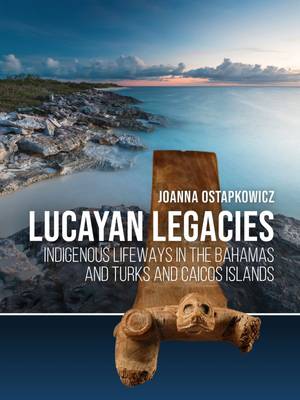
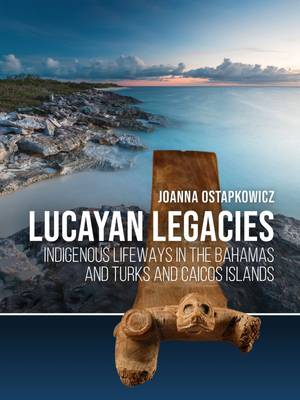
Lucayan Legacies
Indigenous Lifeways in the Bahamas and Turks and Caicos Islands
Joanna Ostapkowicz
Hardcover | Engels
€ 180,00
+ 360 punten
Uitvoering
Omschrijving
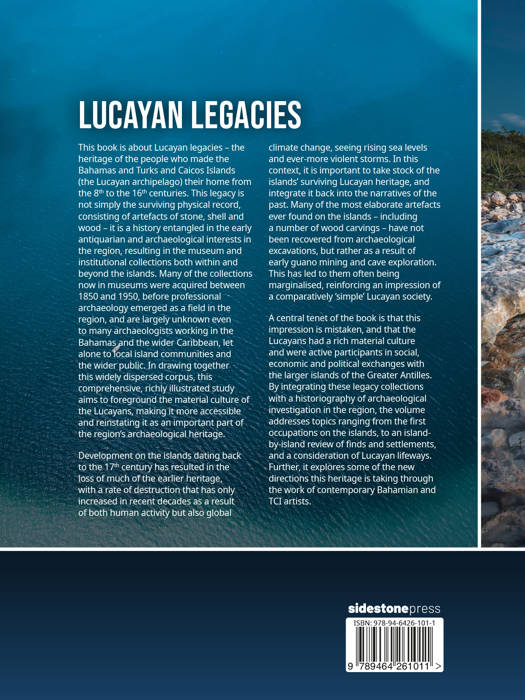
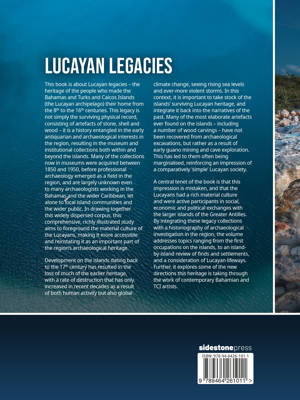
This book is about Lucayan legacies - the heritage of the people who made the Bahamas and Turks and Caicos Islands (the Lucayan archipelago) their home from the 8th to the 16th centuries. This legacy is not simply the surviving physical record, consisting of artifacts of stone, shell and wood - it is a history entangled in the early antiquarian and archaeological interests in the region, resulting in the museum and institutional collections both within and beyond the islands. Many of the collections now in museums were acquired between 1850 and 1950, before professional archaeology emerged as a field in the region, and are largely unknown even to many archaeologists working in the Bahamas and the wider Caribbean, let alone to local island communities and the wider public. In drawing together this widely dispersed corpus, this comprehensive, richly illustrated study aims to foreground the material culture of the Lucayans, making it more accessible and reinstating it as an important part of the region's archaeological heritage.
Development on the islands dating back to the 17th century has resulted in the loss of much of the earlier heritage, with a rate of destruction that has only increased in recent decades as a result of both human activity but also global climate change, seeing rising sea levels and ever-more violent storms. In this context, it is important to take stock of the islands' surviving Lucayan heritage, and integrate it back into the narratives of the past. Many of the most elaborate artifacts ever found on the islands - including a number of wood carvings - have not been recovered from archaeological excavations, but rather as a result of early guano mining and cave exploration. This has led to them often being marginalized, reinforcing an impression of a comparatively 'simple' Lucayan society.
A central tenet of the book is that this impression is mistaken, and that the Lucayans had a rich material culture and were active participants in social, economic and political exchanges with the larger islands of the Greater Antilles. By integrating these legacy collections with a historiography of archaeological investigation in the region, the volume addresses topics ranging from the first occupations on the islands, to an island-by-island review of finds and settlements, and a consideration of Lucayan lifeways. Further, it explores some of the new directions this heritage is taking through the work of contemporary Bahamian and TCI artists.
Development on the islands dating back to the 17th century has resulted in the loss of much of the earlier heritage, with a rate of destruction that has only increased in recent decades as a result of both human activity but also global climate change, seeing rising sea levels and ever-more violent storms. In this context, it is important to take stock of the islands' surviving Lucayan heritage, and integrate it back into the narratives of the past. Many of the most elaborate artifacts ever found on the islands - including a number of wood carvings - have not been recovered from archaeological excavations, but rather as a result of early guano mining and cave exploration. This has led to them often being marginalized, reinforcing an impression of a comparatively 'simple' Lucayan society.
A central tenet of the book is that this impression is mistaken, and that the Lucayans had a rich material culture and were active participants in social, economic and political exchanges with the larger islands of the Greater Antilles. By integrating these legacy collections with a historiography of archaeological investigation in the region, the volume addresses topics ranging from the first occupations on the islands, to an island-by-island review of finds and settlements, and a consideration of Lucayan lifeways. Further, it explores some of the new directions this heritage is taking through the work of contemporary Bahamian and TCI artists.
Specificaties
Betrokkenen
- Auteur(s):
- Uitgeverij:
Inhoud
- Aantal bladzijden:
- 400
- Taal:
- Engels
Eigenschappen
- Productcode (EAN):
- 9789464261028
- Verschijningsdatum:
- 8/08/2023
- Uitvoering:
- Hardcover
- Formaat:
- Genaaid
- Afmetingen:
- 210 mm x 279 mm


Alleen bij Standaard Boekhandel
+ 360 punten op je klantenkaart van Standaard Boekhandel

Beoordelingen
We publiceren alleen reviews die voldoen aan de voorwaarden voor reviews. Bekijk onze voorwaarden voor reviews.