


- Afhalen na 1 uur in een winkel met voorraad
- Gratis thuislevering in België vanaf € 30
- Ruim aanbod met 7 miljoen producten
- Afhalen na 1 uur in een winkel met voorraad
- Gratis thuislevering in België vanaf € 30
- Ruim aanbod met 7 miljoen producten




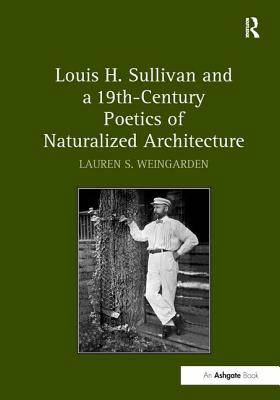
Louis H. Sullivan and a 19th - Century Poetics of Naturalized Architecture
Lauren S Weingarden
Paperback | Engels
€ 112,95
+ 225 punten
Omschrijving
For most of the twentieth century, modernist viewers dismissed the architectural ornament of Louis H. Sullivan (1856-1924) and the majority of his theoretical writings as emotional outbursts of an outmoded romanticism. In this study, Lauren Weingarden reveals Sullivan's eloquent articulation of nineteenth-century romantic practices - literary, linguistic, aesthetic, spiritual, and nationalistic - and thus rescues Sullivan and his legacy from the narrow role imposed on him as a pioneer of twentieth-century modernism. Using three interpretive models, discourse theory, poststructural semiotic analysis, and a pragmatic concept of sign-functions, she restores the integrity of Sullivan's artistic choices and his historical position as a culminating figure within nineteenth-century romanticism. By giving equal weight to Louis Sullivan's writings and designs, Weingarden shows how he translated both Ruskin's tenets of Gothic naturalism and Whitman's poetry of the American landscape into elemental structural forms and organic ornamentation. Viewed as a site where various romantic discourses converged, Sullivan's oeuvre demands a cross-disciplinary exploration of each discursive practice, and its "rules of accumulation, exclusion, reactivation." The overarching theme of this study is the interrogation and restitution of those Foucauldian rules that enabled Sullivan to articulate architecture as a pictorial mode of landscape art, which he considered co-equal with the spiritual and didactic functions of landscape poetry.
Specificaties
Betrokkenen
- Auteur(s):
- Uitgeverij:
Inhoud
- Aantal bladzijden:
- 456
- Taal:
- Engels
Eigenschappen
- Productcode (EAN):
- 9781138276185
- Verschijningsdatum:
- 16/11/2016
- Uitvoering:
- Paperback
- Formaat:
- Trade paperback (VS)
- Afmetingen:
- 170 mm x 244 mm
- Gewicht:
- 721 g


Alleen bij Standaard Boekhandel
+ 225 punten op je klantenkaart van Standaard Boekhandel
Cadeau

AANGERADEN


Beoordelingen
We publiceren alleen reviews die voldoen aan de voorwaarden voor reviews. Bekijk onze voorwaarden voor reviews.