


- Afhalen na 1 uur in een winkel met voorraad
- Gratis thuislevering in België vanaf € 30
- Ruim aanbod met 7 miljoen producten
- Afhalen na 1 uur in een winkel met voorraad
- Gratis thuislevering in België vanaf € 30
- Ruim aanbod met 7 miljoen producten





€ 0,49
Uitvoering
Eenvoudig bestellen
Veilig betalen


Onmiddellijk geleverd via e-mail
Omschrijving
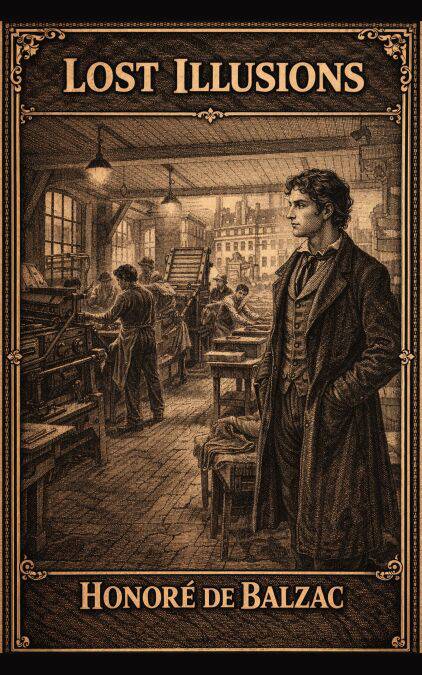
Lost Illusions is one of Honoré de Balzac's most powerful and penetrating novels—a sweeping portrait of ambition, betrayal, art, and the relentless machinery of society. Widely regarded as a cornerstone of La Comédie Humaine, this masterwork offers an unflinching exploration of dreams pursued and shattered in the glittering yet unforgiving world of 19th-century France.
The story follows Lucien Chardon, a gifted and handsome young poet from the provinces who longs for literary fame and social elevation. Armed with talent, charm, and boundless ambition, Lucien leaves his modest home for Paris, determined to conquer the cultural capital of Europe. But the city he idolizes is far from the romantic ideal he imagines. Beneath its brilliance lies a ruthless marketplace where art is bought and sold, reputations are manufactured, and integrity is often sacrificed for success.
As Lucien becomes entangled in the competitive world of journalism and publishing, he quickly learns that talent alone is not enough. Influence, manipulation, and opportunism dictate who rises and who falls. Balzac exposes the corruption of the press, the fragility of public opinion, and the devastating consequences of vanity and compromise. Lucien's journey from hopeful dreamer to morally conflicted social climber reveals how easily ambition can erode principles.
Running parallel to Lucien's story is that of David Séchard, his loyal friend and brother-in-law, an idealistic inventor struggling to revolutionize the printing industry. While Lucien seeks rapid fame and fortune, David pursues patient innovation and intellectual integrity. Their contrasting paths illuminate the novel's central tension: the choice between enduring value and immediate reward.
Through vivid characterization and intricate plotting, Balzac creates a panoramic vision of French society—its aristocracy, middle class, bohemian circles, and financial undercurrents. The novel captures the intoxicating allure of recognition and the painful realization that success often demands compromise. Every triumph carries a cost, and every illusion eventually confronts reality.
More than a story of personal failure, Lost Illusions is a timeless meditation on aspiration and disillusionment. It examines the price of ambition, the vulnerability of youth, and the seductive power of fame. Balzac's keen psychological insight and sharp social critique make the narrative strikingly modern, resonating in an age still driven by media influence and public image.
Epic in scope and deeply human in emotion, Lost Illusions stands as one of the greatest novels of the 19th century—a compelling exploration of hope, ambition, and the harsh lessons learned when dreams collide with the world as it truly is.
The story follows Lucien Chardon, a gifted and handsome young poet from the provinces who longs for literary fame and social elevation. Armed with talent, charm, and boundless ambition, Lucien leaves his modest home for Paris, determined to conquer the cultural capital of Europe. But the city he idolizes is far from the romantic ideal he imagines. Beneath its brilliance lies a ruthless marketplace where art is bought and sold, reputations are manufactured, and integrity is often sacrificed for success.
As Lucien becomes entangled in the competitive world of journalism and publishing, he quickly learns that talent alone is not enough. Influence, manipulation, and opportunism dictate who rises and who falls. Balzac exposes the corruption of the press, the fragility of public opinion, and the devastating consequences of vanity and compromise. Lucien's journey from hopeful dreamer to morally conflicted social climber reveals how easily ambition can erode principles.
Running parallel to Lucien's story is that of David Séchard, his loyal friend and brother-in-law, an idealistic inventor struggling to revolutionize the printing industry. While Lucien seeks rapid fame and fortune, David pursues patient innovation and intellectual integrity. Their contrasting paths illuminate the novel's central tension: the choice between enduring value and immediate reward.
Through vivid characterization and intricate plotting, Balzac creates a panoramic vision of French society—its aristocracy, middle class, bohemian circles, and financial undercurrents. The novel captures the intoxicating allure of recognition and the painful realization that success often demands compromise. Every triumph carries a cost, and every illusion eventually confronts reality.
More than a story of personal failure, Lost Illusions is a timeless meditation on aspiration and disillusionment. It examines the price of ambition, the vulnerability of youth, and the seductive power of fame. Balzac's keen psychological insight and sharp social critique make the narrative strikingly modern, resonating in an age still driven by media influence and public image.
Epic in scope and deeply human in emotion, Lost Illusions stands as one of the greatest novels of the 19th century—a compelling exploration of hope, ambition, and the harsh lessons learned when dreams collide with the world as it truly is.
Specificaties
Betrokkenen
- Auteur(s):
- Uitgeverij:
Inhoud
- Aantal bladzijden:
- 880
- Taal:
- Engels
Eigenschappen
- Productcode (EAN):
- 9781916637290
- Verschijningsdatum:
- 17/02/2026
- Uitvoering:
- E-book
- Beveiligd met:
- Digital watermarking
- Formaat:
- ePub


Alleen bij Standaard Boekhandel
CADEAU

AANGERADEN


Beoordelingen
We publiceren alleen reviews die voldoen aan de voorwaarden voor reviews. Bekijk onze voorwaarden voor reviews.