


- Afhalen na 1 uur in een winkel met voorraad
- Gratis thuislevering in België vanaf € 30
- Ruim aanbod met 7 miljoen producten
- Afhalen na 1 uur in een winkel met voorraad
- Gratis thuislevering in België vanaf € 30
- Ruim aanbod met 7 miljoen producten






€ 41,45
+ 82 punten
Prijzen

Omschrijving
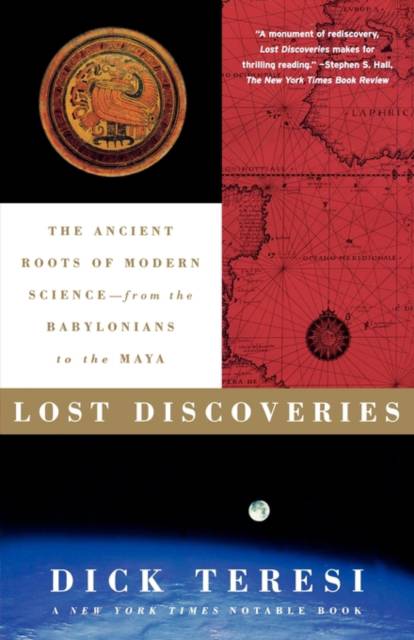
*A New York Times Notable Book* Boldly challenging conventional wisdom, acclaimed science writer and Omni magazine cofounder Dick Teresi traces the origins of contemporary science back to their ancient roots in this eye-opening and landmark work.This innovative history proves once and for all that the roots of modern science were established centuries, and in some instances millennia, before the births of Copernicus, Galileo, and Newton. In this enlightening, entertaining, and important book, Teresi describes many discoveries from all over the non-Western world--Sumeria, Babylon, Egypt, India, China, Africa, Arab nations, the Americas, and the Pacific islands--that equaled and often surpassed Greek and European learning in the fields of mathematics, astronomy, cosmology, physics, geology, chemistry, and technology. The first extensive and authoritative multicultural history of science written for a popular audience, Lost Discoveries fills a critical void in our scientific, cultural, and intellectual history and is destined to become a classic in its field.
Specificaties
Betrokkenen
- Auteur(s):
- Uitgeverij:
Inhoud
- Aantal bladzijden:
- 464
- Taal:
- Engels
Eigenschappen
- Productcode (EAN):
- 9780743243797
- Verschijningsdatum:
- 7/10/2003
- Uitvoering:
- Paperback
- Formaat:
- Trade paperback (VS)
- Afmetingen:
- 140 mm x 216 mm
- Gewicht:
- 544 g


Alleen bij Standaard Boekhandel
+ 82 punten op je klantenkaart van Standaard Boekhandel
Cadeau

AANGERADEN


Beoordelingen
We publiceren alleen reviews die voldoen aan de voorwaarden voor reviews. Bekijk onze voorwaarden voor reviews.