


- Afhalen na 1 uur in een winkel met voorraad
- Gratis thuislevering in België vanaf € 30
- Ruim aanbod met 7 miljoen producten
- Afhalen na 1 uur in een winkel met voorraad
- Gratis thuislevering in België vanaf € 30
- Ruim aanbod met 7 miljoen producten





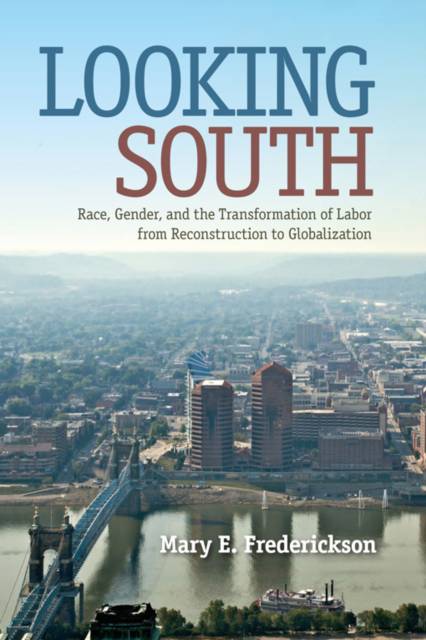
Looking South
Race, Gender, and the Transformation of Labor from Reconstruction to Globalization
Mary E Frederickson
€ 42,95
+ 85 punten
Omschrijving
"A fresh look at the South through the lens of larger global forces. Frederickson links the global and local in new ways that point to a model for future work in the field."--Richard Greenwald, Drew University "Frederickson has delivered compelling essays that brim with fascinating details and cogent observations about the past, present, and future of working people in the South. Connecting the New South, the Nuevo South, and the Global South seamlessly, she writes southern workers onto a world stage."--Cindy Hahamovitch, College of William and Mary In the United States, cheap products made by cheap labor are in especially high demand, purchased by men and women who have watched their own wages decline and jobs disappear. Looking South examines the effects of race, class, and gender in the development of the low-wage, anti-union, and state-supported industries that marked the creation of the New South and now the Global South. Workers in the contemporary Global South--those nations of Central and Latin America, most of Asia, and Africa--live and work within a model of industrial development that materialized in the red brick mills of the New South. As early as the 1950s, this labor model became the prototype used by U.S. companies as they expanded globally. This development has had increasingly powerful effects on workers and consumers at home and around the world. Mary E. Frederickson highlights the major economic and cultural changes brought about by deindustrialization and immigration. She also outlines the events, movements, and personalities involved in the race-, class-, and gender-based resistance to industry's relentless search for cheap labor. Mary E. Frederickson, professor of history at Miami University in Oxford, Ohio, is coeditor of Sisterhood and Solidarity.
Specificaties
Betrokkenen
- Auteur(s):
- Uitgeverij:
Inhoud
- Aantal bladzijden:
- 328
- Taal:
- Engels
- Reeks:
Eigenschappen
- Productcode (EAN):
- 9780813042275
- Verschijningsdatum:
- 20/05/2012
- Uitvoering:
- Paperback
- Formaat:
- Trade paperback (VS)
- Afmetingen:
- 152 mm x 229 mm
- Gewicht:
- 485 g


Alleen bij Standaard Boekhandel
+ 85 punten op je klantenkaart van Standaard Boekhandel
Cadeau

AANGERADEN


Beoordelingen
We publiceren alleen reviews die voldoen aan de voorwaarden voor reviews. Bekijk onze voorwaarden voor reviews.