


- Afhalen na 1 uur in een winkel met voorraad
- Gratis thuislevering in België vanaf € 30
- Ruim aanbod met 7 miljoen producten
- Afhalen na 1 uur in een winkel met voorraad
- Gratis thuislevering in België vanaf € 30
- Ruim aanbod met 7 miljoen producten





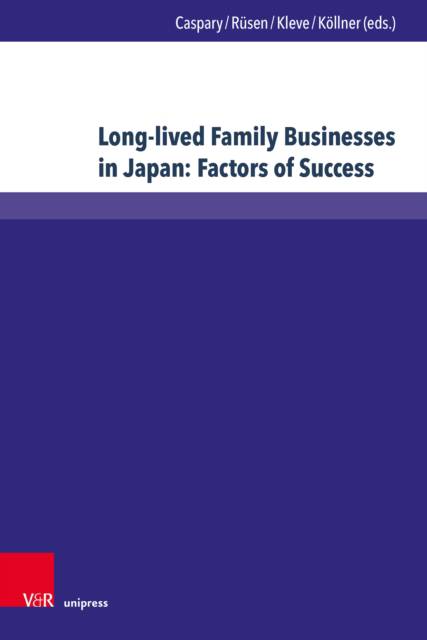
Long-Lived Family Businesses in Japan
Factors of Success
€ 54,45
+ 108 punten
Omschrijving
Japanese family businesses are among the oldest in the world and many of them prove a history record of 200 years and more. Research on several case studies of century old firms ('shinise') in Japan reveal three factors as secrets of their longevity: (1) the Japanese family system ('ie') which favours the succession of the eldest son in the headship of family and business, (2) the option for adopting a capable successor; (3) the inclusion of the relationships with employees, customers, and members of the local community into the strategic decision making. The first chapters shed light on historical milestones, religious beliefs and cultural aspects, and the Japanese family system which shaped the development of family business. Further analysis deals with the succession process in Japan compared to the WIFU Model of Succession in German family firms. The analysis rounds off with perspectives on how to deal with the challenges the Japanese family businesses face regarding the recent changes in the Japanese society.
Specificaties
Betrokkenen
- Uitgeverij:
Inhoud
- Aantal bladzijden:
- 273
- Taal:
- Engels
- Reeks:
- Reeksnummer:
- nr. 34
Eigenschappen
- Productcode (EAN):
- 9783847116813
- Verschijningsdatum:
- 12/02/2024
- Uitvoering:
- Hardcover
- Formaat:
- Genaaid
- Afmetingen:
- 154 mm x 231 mm
- Gewicht:
- 217 g


Alleen bij Standaard Boekhandel
+ 108 punten op je klantenkaart van Standaard Boekhandel
Cadeau

AANGERADEN


Beoordelingen
We publiceren alleen reviews die voldoen aan de voorwaarden voor reviews. Bekijk onze voorwaarden voor reviews.