


- Afhalen na 1 uur in een winkel met voorraad
- Gratis thuislevering in België vanaf € 30
- Ruim aanbod met 7 miljoen producten
- Afhalen na 1 uur in een winkel met voorraad
- Gratis thuislevering in België vanaf € 30
- Ruim aanbod met 7 miljoen producten




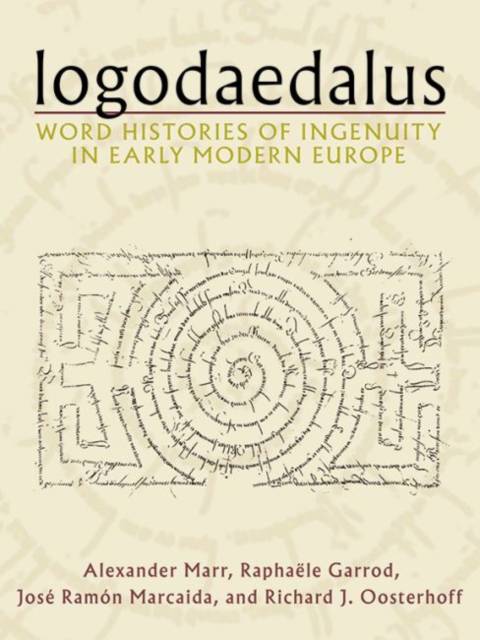
Logodaedalus
Word Histories of Ingenuity in Early Modern Europe
Alexander Marr, Raphaële Garrod, José Ramón Marcaida, Richard J Oosterhoff
Hardcover | Engels
€ 91,95
+ 183 punten
Omschrijving
Before Romantic genius, there was ingenuity. Early modern ingenuity defined every person--not just exceptional individuals--as having their own attributes and talents, stemming from an "inborn nature" that included many qualities, not just intelligence. Through ingenuity and its family of related terms, early moderns sought to understand and appreciate differences between peoples, places, and things in an attempt to classify their ingenuities and assign professions that were best suited to one's abilities. Logodaedalus, a prehistory of genius, explores the various ways this language of ingenuity was defined, used, and manipulated between 1470 and 1750. By analyzing printed dictionaries and other lexical works across a range of languages--Latin, Italian, Spanish, French, English, German, and Dutch--the authors reveal the ways in which significant words produced meaning in history and found expression in natural philosophy, medicine, natural history, mathematics, mechanics, poetics, and artistic theory.
Specificaties
Betrokkenen
- Auteur(s):
- Uitgeverij:
Inhoud
- Aantal bladzijden:
- 376
- Taal:
- Engels
Eigenschappen
- Productcode (EAN):
- 9780822945413
- Verschijningsdatum:
- 15/01/2019
- Uitvoering:
- Hardcover
- Formaat:
- Genaaid
- Afmetingen:
- 157 mm x 231 mm
- Gewicht:
- 635 g


Alleen bij Standaard Boekhandel
+ 183 punten op je klantenkaart van Standaard Boekhandel
AANGERADEN


Beoordelingen
We publiceren alleen reviews die voldoen aan de voorwaarden voor reviews. Bekijk onze voorwaarden voor reviews.