


- Afhalen na 1 uur in een winkel met voorraad
- Gratis thuislevering in België vanaf € 30
- Ruim aanbod met 7 miljoen producten
- Afhalen na 1 uur in een winkel met voorraad
- Gratis thuislevering in België vanaf € 30
- Ruim aanbod met 7 miljoen producten





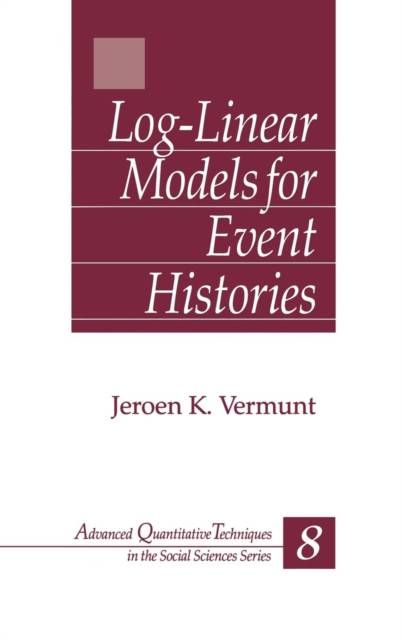
Log-Linear Models for Event Histories
Jeroen K Vermunt
€ 436,95
+ 873 punten
Omschrijving
Event history analysisùa method for explaining why some people are more likely to experience a particular event, transition, or change than other peopleùhas been useful in the social sciences for studying the processes of social change. One of the main difficulties, however, in using this technique is that often information is (partially) missing on some of the relevant variables. Author Jeroen K. Vermunt presents a general approach to these missing data problems in event history analysis that is based on the similarities between log-linear, hazard, and event history models. The book begins with a discussion of log-linear, log-rate, and modified path models and methods for obtaining maximum likelihood estimates of the parameters of these models. Vermunt then shows how to incorporate variables with missing information in log-linear models for non-response. In addition, he covers such topics as the main types of hazard models; censoring; the use of time-varying covariates; models for competing risks; multivariate hazard models; and a general approach for dealing with missing data problems, including unobserved heterogeneity, measurement error in the dependent variable, measurement error in the covariate, partially missing information on the dependent variable, and partially observed covariate values.
Specificaties
Betrokkenen
- Auteur(s):
- Uitgeverij:
Inhoud
- Aantal bladzijden:
- 360
- Taal:
- Engels
- Reeks:
- Reeksnummer:
- nr. 8
Eigenschappen
- Productcode (EAN):
- 9780761909378
- Verschijningsdatum:
- 1/05/1997
- Uitvoering:
- Hardcover
- Formaat:
- Genaaid
- Afmetingen:
- 157 mm x 231 mm
- Gewicht:
- 703 g


Alleen bij Standaard Boekhandel
+ 873 punten op je klantenkaart van Standaard Boekhandel
Cadeau

AANGERADEN


Beoordelingen
We publiceren alleen reviews die voldoen aan de voorwaarden voor reviews. Bekijk onze voorwaarden voor reviews.