


- Afhalen na 1 uur in een winkel met voorraad
- Gratis thuislevering in België vanaf € 30
- Ruim aanbod met 7 miljoen producten
- Afhalen na 1 uur in een winkel met voorraad
- Gratis thuislevering in België vanaf € 30
- Ruim aanbod met 7 miljoen producten





Omschrijving
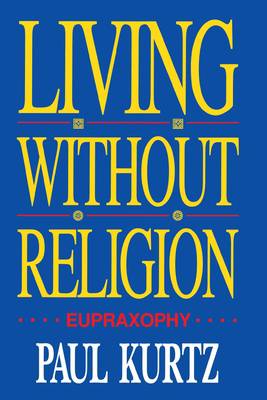
Paul Kurtz was one of America's foremost expositors of humanist philosophy. In Living without Religion he introduced a new word to describe humanism - eupraxophy. Derived from the Greek roots eu (good), praxis (practice), and sophia (philosophical and scientific wisdom), eupraxophy means literally "good conduct and wisdom in living."Eupraxophy draws upon the disciplines of the sciences, philosophy, and ethics - yet it is more than these. Not simply an intellectual position, eupraxophy expresses convictions about the nature of the universe and how to live one's life with commitment and dedication. It thus combines both a cosmic outlook and a life stance. Kurtz maintains that the eupraxopher can lead a meaningful life and help create a just society, and he offers concrete recommendations for the development of the humanism of the future.An entire section of this book is devoted to the careful definition of religion, which clearly demonstrates than an authentic moral life is possible without religious belief.Following Kurtz's Transcendental Temptation and Forbidden Fruit, Living without Religion completes a trilogy of humanist works that responds to theistic critics of modern secular humanism.
Specificaties
Betrokkenen
- Auteur(s):
- Uitgeverij:
Inhoud
- Aantal bladzijden:
- 159
- Taal:
- Engels
Eigenschappen
- Productcode (EAN):
- 9780879759292
- Verschijningsdatum:
- 1/09/1994
- Uitvoering:
- Paperback
- Formaat:
- Trade paperback (VS)
- Afmetingen:
- 154 mm x 227 mm
- Gewicht:
- 249 g


Alleen bij Standaard Boekhandel
+ 56 punten op je klantenkaart van Standaard Boekhandel
AANGERADEN


Beoordelingen
We publiceren alleen reviews die voldoen aan de voorwaarden voor reviews. Bekijk onze voorwaarden voor reviews.