


- Afhalen na 1 uur in een winkel met voorraad
- Gratis thuislevering in België vanaf € 30
- Ruim aanbod met 7 miljoen producten
- Afhalen na 1 uur in een winkel met voorraad
- Gratis thuislevering in België vanaf € 30
- Ruim aanbod met 7 miljoen producten





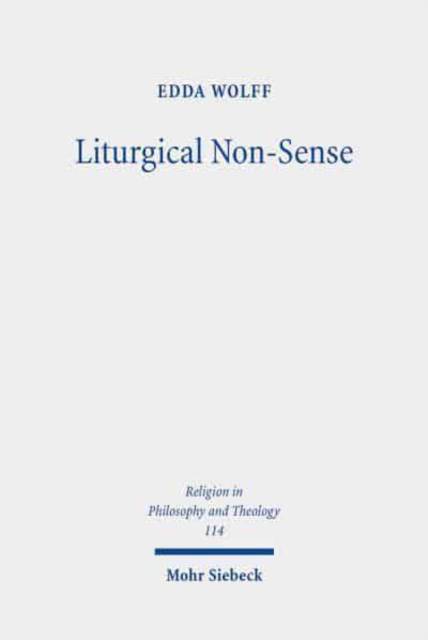
Liturgical Non-Sense
Negative Hermeneutics as a Method for Liturgical Studies Based on Liturgical Case Studies of Holy Saturday
Edda Wolff
€ 93,95
+ 187 punten
Omschrijving
In this work, Edda Wolff analyses how a more subtle and nuanced understanding of 'non-sense' can enhance the study of liturgy and its contribution to a broader theological discourse. The study is divided into two parts: the first outlines the methodological starting point for a dialogue between liturgical studies and philosophical-hermeneutical approaches, while the second applies negative hermeneutics to analyse the liturgy of Holy Saturday through case studies. The choice of Holy Saturday reflects the broader interest of the work in the 'in-between' spaces, the gaps, paradox and negative structures within liturgy. Holy Saturday thus serves as a paradigm for the liturgical engagement with the experience of a loss of sense, as well as the formal lack of pre-given structures. On this basis, the author reflects on the methodological challenges and potential of a negative liturgical hermeneutics for the dialogue with other theological subjects.
Specificaties
Betrokkenen
- Auteur(s):
- Uitgeverij:
Inhoud
- Aantal bladzijden:
- 247
- Taal:
- Engels
- Reeks:
Eigenschappen
- Productcode (EAN):
- 9783161599521
- Verschijningsdatum:
- 1/09/2021
- Uitvoering:
- Paperback
- Formaat:
- Trade paperback (VS)
- Afmetingen:
- 231 mm x 155 mm
- Gewicht:
- 376 g


Alleen bij Standaard Boekhandel
+ 187 punten op je klantenkaart van Standaard Boekhandel

Beoordelingen
We publiceren alleen reviews die voldoen aan de voorwaarden voor reviews. Bekijk onze voorwaarden voor reviews.