


- Afhalen na 1 uur in een winkel met voorraad
- Gratis thuislevering in België vanaf € 30
- Ruim aanbod met 7 miljoen producten
- Afhalen na 1 uur in een winkel met voorraad
- Gratis thuislevering in België vanaf € 30
- Ruim aanbod met 7 miljoen producten





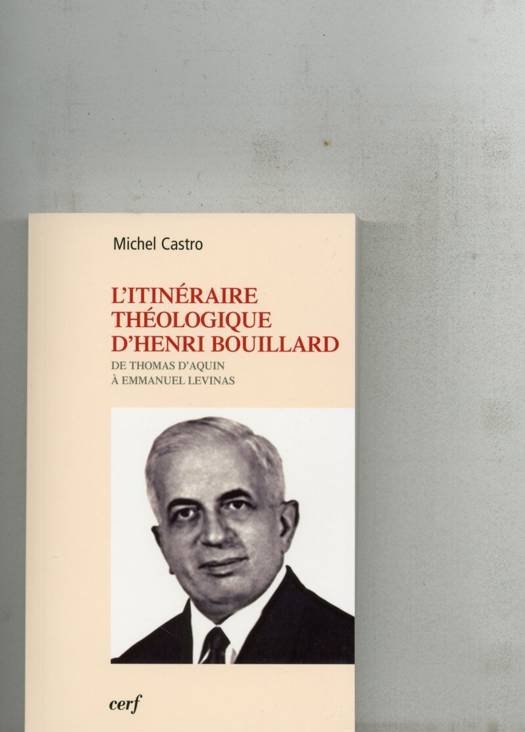
L'ITINÉRAIRE THÉOLOGIQUE D'HENRI BOUILLARD
de Thomas d'Aquin à Emmanuel Levinas
Castro Michel
Paperback | Frans
€ 22,00
+ 44 punten
Eenvoudig bestellen
Veilig betalen


Gratis thuislevering vanaf € 30 (via bpost)
Gratis levering in je Standaard Boekhandel
Omschrijving
L'itinéraire d'Henri Bouillard, s.j. (1908-1981), quoique fortement marqué par Kant, est jalonné de plusieurs « rencontres » décisives dans l'élaboration de sa pensée. Thomas d'Aquin le familiarise avec la « nouvelle théologie » et le pousse à passer d'une démarche dogmatique à une approche herméneutique Maurice Blondel, lui, l'amène à opérer le tournant anthropologique de la théologie Karl Barth le rallie, avec réserve, à sa position : si nous ne connaissons Dieu que par Dieu, c'est nous qui le connaissons Eric Weil l'entraîne à approfondir, à sa manière, le tournant anthropologique déjà entrepris, en mettant en avant la double herméneutique de l'existence humaine et du message évangélique, tout en refusant le recours aux sciences de l'homme en théologie enfin, Emmanuel Levinas lui permet de cerner l'originalité chrétienne de l'incarnation de Dieu en Jésus. Si ces cinq rencontres l'engagent à passer d'une démarche dogmatique à une approche herméneutique, elles l'écartent aussi d'une méthode généalogique entée sur les sciences humaines. A ce titre, il est témoin des grandes orientations théologiques contemporaines.
--
The life and path of Henri Bouillard SJ (1908-1981) was strongly influenced by Kant but the elaboration of his philosophy was also marked by several decisive ‘meetings'. Thomas Aquinas familiarized him with the ‘new theology' and persuaded him to move from a dogmatic to a hermeneutical approach Maurice Blondel directed him to the anthropological side of theology Karl Barth convinced him, with some reserves, to join his stance: if we only know God through God, it is we who know him. Eric Weil led him to deepen, in his own way, the anthropological approach he had already adopted by focusing on the double hermeneutics of human existence and the Gospel, while refusing to resort to human science in theology. Lastly, Emmanuel Levinas permitted him to define the Christian originality of the incarnation of God in Jesus. Although these five encounters inspired him to advance from a dogmatic approach to a hermeneutical one, they also distanced him from the genealogical method deployed in human science. In this respect, he is the witness of today's major theological orientations.
--
The life and path of Henri Bouillard SJ (1908-1981) was strongly influenced by Kant but the elaboration of his philosophy was also marked by several decisive ‘meetings'. Thomas Aquinas familiarized him with the ‘new theology' and persuaded him to move from a dogmatic to a hermeneutical approach Maurice Blondel directed him to the anthropological side of theology Karl Barth convinced him, with some reserves, to join his stance: if we only know God through God, it is we who know him. Eric Weil led him to deepen, in his own way, the anthropological approach he had already adopted by focusing on the double hermeneutics of human existence and the Gospel, while refusing to resort to human science in theology. Lastly, Emmanuel Levinas permitted him to define the Christian originality of the incarnation of God in Jesus. Although these five encounters inspired him to advance from a dogmatic approach to a hermeneutical one, they also distanced him from the genealogical method deployed in human science. In this respect, he is the witness of today's major theological orientations.
Specificaties
Betrokkenen
- Auteur(s):
- Uitgeverij:
Inhoud
- Aantal bladzijden:
- 262
- Taal:
- Frans
Eigenschappen
- Productcode (EAN):
- 9782204096898
- Verschijningsdatum:
- 22/08/2012
- Uitvoering:
- Paperback
- Afmetingen:
- 122 mm x 192 mm
- Gewicht:
- 274 g


Alleen bij Standaard Boekhandel
+ 44 punten op je klantenkaart van Standaard Boekhandel
CADEAU

AANGERADEN


Beoordelingen
We publiceren alleen reviews die voldoen aan de voorwaarden voor reviews. Bekijk onze voorwaarden voor reviews.