



Je cadeautjes zeker op tijd in huis hebben voor de feestdagen? Kom langs in onze winkels en vind het perfecte geschenk!
- Afhalen na 1 uur in een winkel met voorraad
- Gratis thuislevering in België vanaf € 30
- Ruim aanbod met 7 miljoen producten
Je cadeautjes zeker op tijd in huis hebben voor de feestdagen? Kom langs in onze winkels en vind het perfecte geschenk!
- Afhalen na 1 uur in een winkel met voorraad
- Gratis thuislevering in België vanaf € 30
- Ruim aanbod met 7 miljoen producten





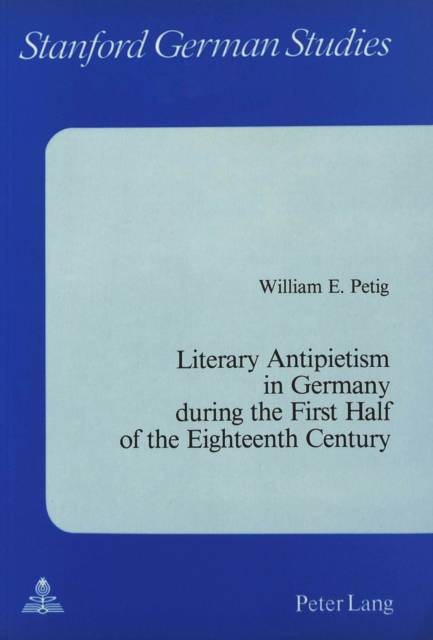
Literary Antipietism in Germany During the First Half of the Eighteenth Century
William E Petig
€ 29,45
+ 58 punten
Omschrijving
Pietism had a considerable impact on the cultural and social life of eighteenth-century Germany. However, the confrontation between what was essentially a religious movement and the literary world has not been adequately explored. This is particularly true of the negative reaction to Pietism in German literature or «literary antipietism», as it is referred to here.
After establishing the background against which literary anti- pietism develops, the book examines those German literary works from the first half of the eighteenth century which portray Pietists in a negative manner and sheds light on the genesis as well as on the public reception of these works. The last chapter dis- cusses the theological basis for the Pietists' opposition to secular literature and the theater, chronicles their efforts in Halle to close theaters and forbid the reading of worldly literature in the schools, and analyzes the Pietists' understanding of the creative process as it relates to literature and the arts.
After establishing the background against which literary anti- pietism develops, the book examines those German literary works from the first half of the eighteenth century which portray Pietists in a negative manner and sheds light on the genesis as well as on the public reception of these works. The last chapter dis- cusses the theological basis for the Pietists' opposition to secular literature and the theater, chronicles their efforts in Halle to close theaters and forbid the reading of worldly literature in the schools, and analyzes the Pietists' understanding of the creative process as it relates to literature and the arts.
Specificaties
Betrokkenen
- Auteur(s):
- Uitgeverij:
Inhoud
- Aantal bladzijden:
- 236
- Taal:
- Engels
- Reeks:
- Reeksnummer:
- nr. 22
Eigenschappen
- Productcode (EAN):
- 9780820400877
- Verschijningsdatum:
- 31/12/1984
- Uitvoering:
- Paperback
- Formaat:
- Trade paperback (VS)
- Afmetingen:
- 225 mm x 158 mm
- Gewicht:
- 399 g


Alleen bij Standaard Boekhandel
+ 58 punten op je klantenkaart van Standaard Boekhandel
CADEAU


Beoordelingen
We publiceren alleen reviews die voldoen aan de voorwaarden voor reviews. Bekijk onze voorwaarden voor reviews.