


- Afhalen na 1 uur in een winkel met voorraad
- Gratis thuislevering in België vanaf € 30
- Ruim aanbod met 7 miljoen producten
- Afhalen na 1 uur in een winkel met voorraad
- Gratis thuislevering in België vanaf € 30
- Ruim aanbod met 7 miljoen producten




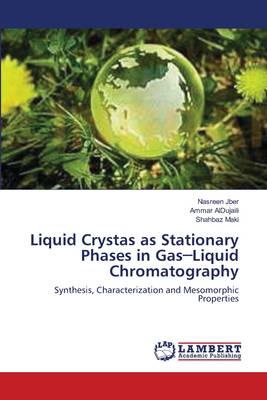
Liquid Crystas as Stationary Phases in Gas─Liquid Chromatography
Synthesis, Characterization and Mesomorphic Properties
Nasreen Jber, Ammar Aldujaili, Shahbaz Maki
Paperback | Engels
€ 68,45
+ 136 punten
Omschrijving
A fact of intermolecular reactions or interactions between the liquid crystal and the chromatographed substances is important for the understanding of the phenomena taking place in the chromatographic column. The structure of the molecules and their polarity and polarizability affect, as well as, the solubility of the chromatographed substances in the liquid crystal plays an important influence on the separation. The properties of the liquid crystal stationary phases depend both on the structure of the main chain of the molecule and on the terminal substituents which strongly affect the polarity of the molecules. However, an equally important or even greater effect on the chromatographic properties of liquid crystals is exerted by the lateral substituents. These substituents not only affect the intermolecular reactions between the liquid crystal and the chromatographed substance but also the liquid crystal - liquid crystal interactions. The lateral substituents also affect the selectivity of the liquid crystal owing to the changes they produce in the distance between its molecules.
Specificaties
Betrokkenen
- Auteur(s):
- Uitgeverij:
Inhoud
- Aantal bladzijden:
- 104
- Taal:
- Engels
Eigenschappen
- Productcode (EAN):
- 9783659337994
- Verschijningsdatum:
- 4/03/2014
- Uitvoering:
- Paperback
- Afmetingen:
- 152 mm x 229 mm
- Gewicht:
- 163 g


Alleen bij Standaard Boekhandel
+ 136 punten op je klantenkaart van Standaard Boekhandel
AANGERADEN


Beoordelingen
We publiceren alleen reviews die voldoen aan de voorwaarden voor reviews. Bekijk onze voorwaarden voor reviews.