


- Afhalen na 1 uur in een winkel met voorraad
- Gratis thuislevering in België vanaf € 30
- Ruim aanbod met 7 miljoen producten
- Afhalen na 1 uur in een winkel met voorraad
- Gratis thuislevering in België vanaf € 30
- Ruim aanbod met 7 miljoen producten





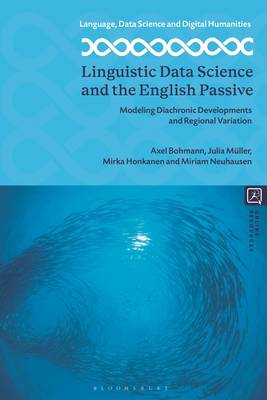
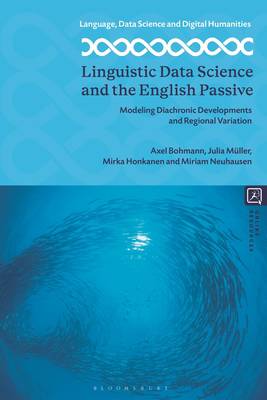
Linguistic Data Science and the English Passive
Modeling Diachronic Developments and Regional Variation
Axel Bohmann, Julia Müller, Mirka Honkanen, Miriam Neuhausen
€ 220,45
+ 440 punten
Omschrijving
The choice between BE and GET as auxiliary verbs, as in "She was promoted" vs "She got promoted", is a central, grammatical feature, yet the many proposed nuances conditioning this phenomenon have escaped large-scale empirical validation to date. This book fills this gap, using multivariate statistical analyses of several large corpora to explore different factors determining the choice of English passive auxiliary.
Addressing both diachronic developments (using the Corpus of Historical American English) and synchronic regional variation (using the Corpus of Global Web-based English), the book employs methods that combine traditional corpus linguistics with newer machine-learning tools in an innovative and intricate manner. To circumscribe the variable context, the authors train a statistical model to distinguish central from peripheral passives. The study tests the influence of various predictors, derived from the previous literature on the passive, with the use of automated sentiment analysis and subject detection, manual animacy coding, distributional semantics, and a mixed-effects regression model. Putting forward an automatic way of distinguishing more stative from more dynamic passives, the book demonstrates how to examine the passive construction in a much larger dataset than in previous studies, and shows how advanced computational models can be used to productively engage traditional philological questions, such as those related to language change and regional variation.Specificaties
Betrokkenen
- Auteur(s):
- Uitgeverij:
Inhoud
- Aantal bladzijden:
- 280
- Taal:
- Engels
- Reeks:
Eigenschappen
- Productcode (EAN):
- 9781350386549
- Verschijningsdatum:
- 11/12/2025
- Uitvoering:
- Hardcover
- Formaat:
- Genaaid
- Afmetingen:
- 156 mm x 234 mm
- Gewicht:
- 566 g


Alleen bij Standaard Boekhandel
+ 440 punten op je klantenkaart van Standaard Boekhandel
AANGERADEN


Beoordelingen
We publiceren alleen reviews die voldoen aan de voorwaarden voor reviews. Bekijk onze voorwaarden voor reviews.