


- Afhalen na 1 uur in een winkel met voorraad
- Gratis thuislevering in België vanaf € 30
- Ruim aanbod met 7 miljoen producten
- Afhalen na 1 uur in een winkel met voorraad
- Gratis thuislevering in België vanaf € 30
- Ruim aanbod met 7 miljoen producten





€ 251,95
+ 503 punten
Omschrijving
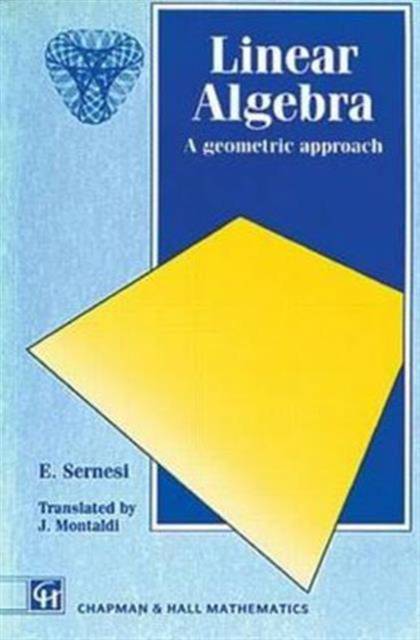
This is an undergraduate textbook suitable for linear algebra courses. This is the only textbook that develops the linear algebra hand-in-hand with the geometry of linear (or affine) spaces in such a way that the understanding of each reinforces the other. The text is divided into two parts: Part I is on linear algebra and affine geometry, finishing with a chapter on transformation groups; Part II is on quadratic forms and their geometry (Euclidean geometry), including a chapter on finite subgroups of 0 (2). Each of the 23 chapters concludes with a generous helping of exercises, and a selection of these have solutions at the end of the book. The chapters also contain many examples, both numerical worked examples (mostly in 2 and 3 dimensions), as well as examples which take some of the ideas further. Many of the chapters contain "complements" which develop more special topics, and which can be omitted on a first reading. The structure of the book is designed to allow as much flexibility as possible in designing a course, either by omitting whole chapters or by omitting the "complements" or specific examples.
Specificaties
Betrokkenen
- Auteur(s):
- Uitgeverij:
Inhoud
- Aantal bladzijden:
- 380
- Taal:
- Engels
- Reeks:
Eigenschappen
- Productcode (EAN):
- 9780412406805
- Verschijningsdatum:
- 15/05/1993
- Uitvoering:
- Paperback
- Formaat:
- Trade paperback (VS)
- Afmetingen:
- 156 mm x 234 mm
- Gewicht:
- 530 g


Alleen bij Standaard Boekhandel
+ 503 punten op je klantenkaart van Standaard Boekhandel
Cadeau

AANGERADEN


Beoordelingen
We publiceren alleen reviews die voldoen aan de voorwaarden voor reviews. Bekijk onze voorwaarden voor reviews.