


- Afhalen na 1 uur in een winkel met voorraad
- Gratis thuislevering in België vanaf € 30
- Ruim aanbod met 7 miljoen producten
- Afhalen na 1 uur in een winkel met voorraad
- Gratis thuislevering in België vanaf € 30
- Ruim aanbod met 7 miljoen producten




€ 98,99
Omschrijving
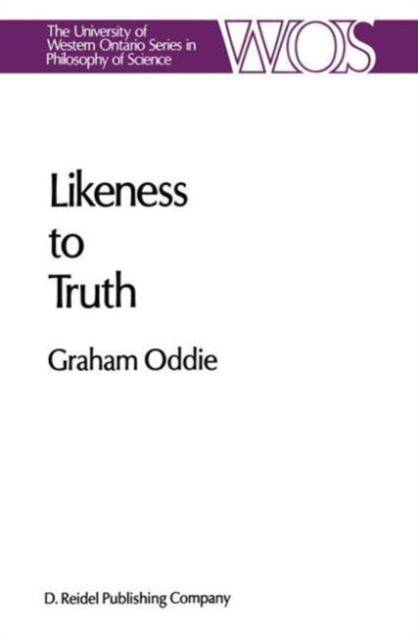
The concept of likeness to truth, like that of truth itself, is fundamental to a realist conception of inquiry. To demonstrate this we need only make two rather modest aim of an inquiry, as an inquiry, is realist assumptions: the truth doctrine (that the the truth of some matter) and the progress doctrine (that one false theory may realise this aim better than another). Together these yield the conclusion that a false theory may be more truthlike, or closer to the truth, than another. It is the aim of this book to give a rigorous philosophical analysis of the concept of likeness to truth, and to examine the consequences, some of them no doubt surprising to those who have been unduly impressed by the (admittedly important) true/false dichotomy. Truthlikeness is not only a requirement of a particular philosophical outlook, it is as deeply embedded in common sense as the concept of truth. Everyone seems to be capable of grading various propositions, in different (hypothetical) situations, according to their closeness to the truth in those situations. And (if my experience is anything to go by) there is remarkable unanimity on these pretheoretical judge- ments. This is not proof that there is a single coherent concept underlying these judgements. The whole point of engaging in philosophical analysis is to make this claim plausible.
Specificaties
Betrokkenen
- Auteur(s):
- Uitgeverij:
Inhoud
- Aantal bladzijden:
- 236
- Taal:
- Engels
- Reeks:
- Reeksnummer:
- nr. 30
Eigenschappen
- Productcode (EAN):
- 9789027722386
- Verschijningsdatum:
- 30/04/1986
- Uitvoering:
- Hardcover
- Formaat:
- Genaaid
- Gewicht:
- 479 g


Alleen bij Standaard Boekhandel
Cadeau

AANGERADEN


Beoordelingen
We publiceren alleen reviews die voldoen aan de voorwaarden voor reviews. Bekijk onze voorwaarden voor reviews.