


- Afhalen na 1 uur in een winkel met voorraad
- Gratis thuislevering in België vanaf € 30
- Ruim aanbod met 7 miljoen producten
- Afhalen na 1 uur in een winkel met voorraad
- Gratis thuislevering in België vanaf € 30
- Ruim aanbod met 7 miljoen producten





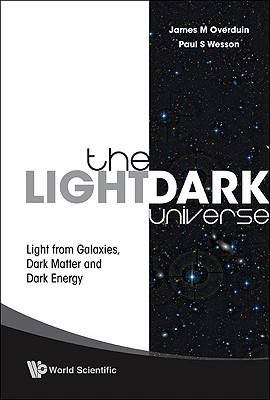
Light/Dark Universe, The: Light from Galaxies, Dark Matter and Dark Energy
Paul S Wesson, James M Overduin
Paperback | Engels
€ 55,45
+ 110 punten
Omschrijving
To the eyes of the average person and the trained scientist, the night sky is dark, even though the universe is populated by myriads of bright galaxies. Why this happens is a question commonly called Olbers' Paradox, and dates from at least 1823. How dark is the night sky is a question which preoccupies astrophysicists at the present. The answer to both questions tells us about the origin of the universe and the nature of its contents -- luminous galaxies like the Milky Way, plus the dark matter between them and the mysterious dark energy which appears to be pushing everything apart. In this book, the fascinating history of Olbers' Paradox is reviewed, and the intricate physics of the light/dark universe is examined in detail. The fact that the night sky is dark (a basic astronomical observation that anybody can make) turns out to be connected with the finite age of the universe, thereby confirming some event like the Big Bang. But the space between the galaxies is not perfectly black, and data on its murkiness at various wavelengths can be used to constrain and identify its unseen constituents.
Specificaties
Betrokkenen
- Auteur(s):
- Uitgeverij:
Inhoud
- Aantal bladzijden:
- 236
- Taal:
- Engels
Eigenschappen
- Productcode (EAN):
- 9789812835895
- Verschijningsdatum:
- 21/08/2008
- Uitvoering:
- Paperback
- Formaat:
- Trade paperback (VS)
- Afmetingen:
- 152 mm x 226 mm
- Gewicht:
- 430 g


Alleen bij Standaard Boekhandel
+ 110 punten op je klantenkaart van Standaard Boekhandel
Cadeau

AANGERADEN


Beoordelingen
We publiceren alleen reviews die voldoen aan de voorwaarden voor reviews. Bekijk onze voorwaarden voor reviews.