


- Afhalen na 1 uur in een winkel met voorraad
- Gratis thuislevering in België vanaf € 30
- Ruim aanbod met 7 miljoen producten
- Afhalen na 1 uur in een winkel met voorraad
- Gratis thuislevering in België vanaf € 30
- Ruim aanbod met 7 miljoen producten





€ 83,95
+ 167 punten
Omschrijving
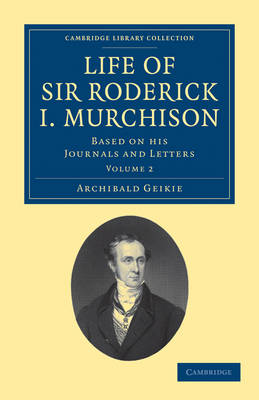
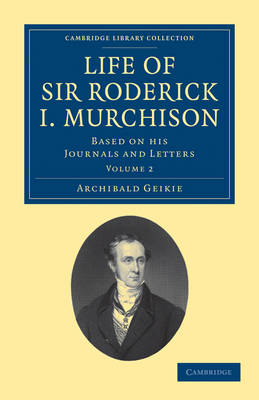
Sir Roderick Impey Murchison (1792-1871) was an influential Scottish geologist best known for his classification of Palaeozoic rocks into the Silurian system. After early military experience in the Peninsular War, he resigned his commission; a chance meeting with Sir Humphrey Davy led him subsequently to pursue a scientific career. The Silurian System, published in 1839, was a highly influential study, which established the oldest contemporary classification of fossil-bearing strata. Murchison was appointed President of the Royal Geographical Society in 1843. These volumes, first published in 1875, use information taken from Murchison's private journals and correspondence. Archibald Geikie (1835-1924) provides a detailed account of his mentor's life and work in the context of geology as a developing science in the early nineteenth century, and provides a fascinating insight into the life and work of this eminent Victorian geologist. Volume 2 describes his later life, from 1843 to 1871.
Specificaties
Betrokkenen
- Auteur(s):
- Uitgeverij:
Inhoud
- Aantal bladzijden:
- 412
- Taal:
- Engels
- Reeks:
Eigenschappen
- Productcode (EAN):
- 9781108072359
- Verschijningsdatum:
- 2/06/2011
- Uitvoering:
- Paperback
- Formaat:
- Trade paperback (VS)
- Afmetingen:
- 140 mm x 216 mm
- Gewicht:
- 521 g


Alleen bij Standaard Boekhandel
+ 167 punten op je klantenkaart van Standaard Boekhandel
Cadeau

AANGERADEN


Beoordelingen
We publiceren alleen reviews die voldoen aan de voorwaarden voor reviews. Bekijk onze voorwaarden voor reviews.