


- Afhalen na 1 uur in een winkel met voorraad
- Gratis thuislevering in België vanaf € 30
- Ruim aanbod met 7 miljoen producten
- Afhalen na 1 uur in een winkel met voorraad
- Gratis thuislevering in België vanaf € 30
- Ruim aanbod met 7 miljoen producten





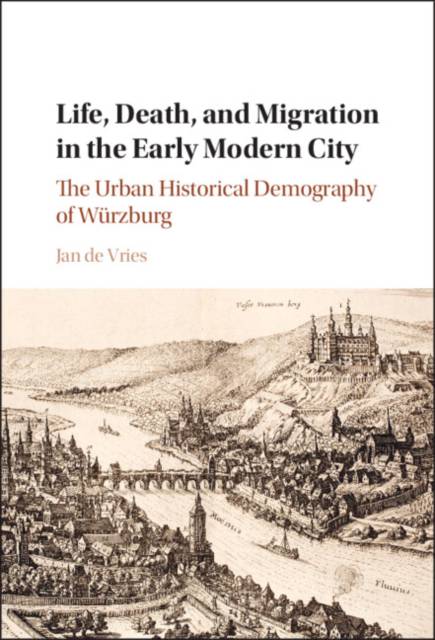
Life, Death, and Migration in the Early Modern City
The Urban Historical Demography of Wurzburg
Jan de Vries
Hardcover | Engels
€ 187,45
+ 374 punten
Omschrijving
In this rich study of early modern Würzburg, Jan de Vries reconstructs the demographic life of a pre-industrial city. Utilising modern demographic techniques, he analyses data about thousands of families between 1696-1711 and examines every stage of the life course from infancy, leaving home, marriage and fertility, to widowhood, remarriage, and mortality. Close study of a single German city allows for special attention to be paid to differences of social class and migrant status, and de Vries emphasises the critical role of migrants to the make-up of the urban community. This new interpretation allows for the Sharlin theory and other questions concerning marriage choice, fertility control, and mortality risks to be tested. At every stage, de Vries compares the findings for Würzburg to those of other cities in Germany and Europe, developing existing generalisations, and contributing to a better understanding of urban historical demography.
Specificaties
Betrokkenen
- Auteur(s):
- Uitgeverij:
Inhoud
- Aantal bladzijden:
- 304
- Taal:
- Engels
Eigenschappen
- Productcode (EAN):
- 9781009641517
- Verschijningsdatum:
- 5/03/2026
- Uitvoering:
- Hardcover
- Formaat:
- Genaaid
- Afmetingen:
- 152 mm x 229 mm
- Gewicht:
- 576 g


Alleen bij Standaard Boekhandel
+ 374 punten op je klantenkaart van Standaard Boekhandel
Cadeau

AANGERADEN


Beoordelingen
We publiceren alleen reviews die voldoen aan de voorwaarden voor reviews. Bekijk onze voorwaarden voor reviews.