


- Afhalen na 1 uur in een winkel met voorraad
- Gratis thuislevering in België vanaf € 30
- Ruim aanbod met 7 miljoen producten
- Afhalen na 1 uur in een winkel met voorraad
- Gratis thuislevering in België vanaf € 30
- Ruim aanbod met 7 miljoen producten





€ 89,95
+ 179 punten
Omschrijving
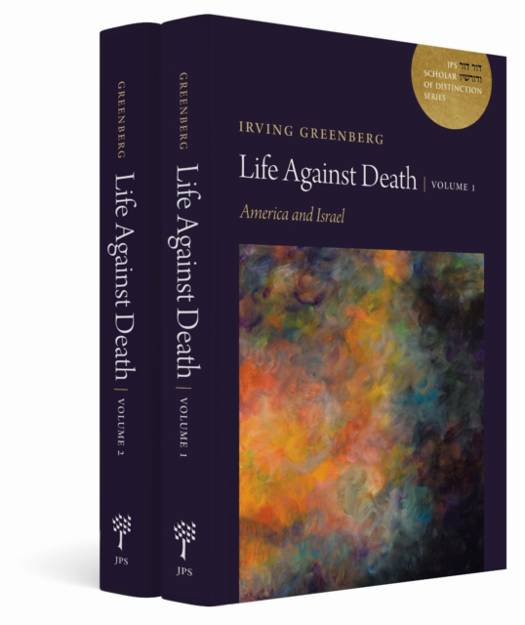
In Life Against Death, Volume 1, Rabbi Irving Greenberg curates, introduces, and reflects on the most important essays written over the course of his lifetime on the United States and Israel, from 1965 to 2025. These influential works recognized as classic in his oeuvre identify turning points in Jewish life, along with policies key to successful Jewish living in the modern world.
Greenberg begins by reflecting on the universal struggle of life against death in the world. Judaism and the Jewish people are meant to serve as an avant-garde in repairing the world by overcoming the enemies of life, including oppression and war. In Part 1, "America," he champions an enrichment of Jewish life and an embrace of pluralism as necessary responses to Jews' acceptance in open society and endangerment from totalitarianism. In Part 2, "Israel," he offers vision and guidance on the religious significance of the State of Israel, on interactions of Israel and American Jewry, and on a new ethic of power that relinquishes purity for the opportunity to create real life in the real world.
New introductions to each essay narrate behind-the-scenes stories and breakthroughs formative to its contents, as well as Greenberg's hindsight: evolving thoughts, recognitions of past errors, comparisons of his predictions versus realities, and insights on relevance of the core principles in our changed times.
Two essays have never been published before: "The Religious Significance of the State of Israel," given as a conference paper in 1970, and "Israel and World Jewry After October 7," written in 2025 as a needed response to the fundamental transformation of Israel's image and world status.
Readers will get to know Greenberg as a thought leader, an activist, a man, and a Jew.
In Life Against Death, Volume 2, Rabbi Irving Greenberg curates, introduces, and reflects on the most important essays written over the course of his lifetime on the Holocaust and Jewish-Christian relations, from 1977 to 2016. These influential works recognized as classic in his oeuvre identify turning points in Jewish life along with policies key to successful Jewish living in the modern world.
Greenberg begins by reflecting on the universal struggle of life against death in the world. Judaism and the Jewish people are meant to serve as an avant-garde in repairing the world by overcoming the enemies of life, including oppression, war, and death. Against this, antisemitism has been a pathological force in Jewish history. The Holocaust was an almost successful attempt to obliterate Jewry as well as Judaism's teachings and values.
In Part 1, "The Holocaust," Greenberg traces the development of his pioneering theological responses meant to incorporate this catastrophe into Jewish life while repairing the credibility and real life effectiveness of Jewish religion: the mandate to recreate life on the greatest possible scale; the discovery that God had relinquished control in history so that humans could take greater responsibility in shaping historical outcomes; and the flourishing of pluralism as an antidote to the flawed nature of even the noblest of singular paths.
In Part 2, "Jewish-Christian Relations," he offers the most positive Jewish theology of Christianity ever produced by a traditional Jewish thinker: a trailblazing vision that God meant Judaism and Christianity to be covenantal partners and parallel channels to bring tikkun olam to humanity.
New introductions to each essay narrate behind-the-scenes stories and breakthroughs formative to its contents, as well as Greenberg's hindsight: evolving thoughts, recognitions of past errors, comparisons of his predictions versus realities, and insights on relevance of the core principles in our changed times. Readers will get to know Greenberg as a thought leader, an activist, a man, and a Jew.
Specificaties
Betrokkenen
- Auteur(s):
- Uitgeverij:
Inhoud
- Aantal bladzijden:
- 200
- Taal:
- Engels
- Reeks:
Eigenschappen
- Productcode (EAN):
- 9780827616165
- Verschijningsdatum:
- 1/10/2026
- Uitvoering:
- Boek
- Afmetingen:
- 152 mm x 229 mm


Alleen bij Standaard Boekhandel
+ 179 punten op je klantenkaart van Standaard Boekhandel
Cadeau

AANGERADEN


Beoordelingen
We publiceren alleen reviews die voldoen aan de voorwaarden voor reviews. Bekijk onze voorwaarden voor reviews.