


- Afhalen na 1 uur in een winkel met voorraad
- Gratis thuislevering in België vanaf € 30
- Ruim aanbod met 7 miljoen producten
- Afhalen na 1 uur in een winkel met voorraad
- Gratis thuislevering in België vanaf € 30
- Ruim aanbod met 7 miljoen producten





€ 61,95
+ 123 punten
Omschrijving
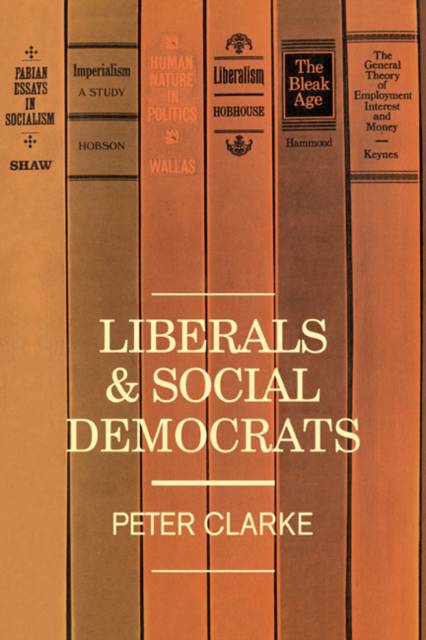
This ambitious and wide-ranging book is about the relationship between liberalism and socialism in Britain in the late nineteenth and twentieth centuries. It focuses largely on a group of intellectuals whose names are familiar but whose work has been neglected or misunderstood. Graham Wallas is the forgotten man of early Fabianism. L. T. Hobhouse has misleadingly been typecast as the last major exponent of a dying liberal tradition. J. A. Hobson's reputation has been obscured by repeated claims that he was a precursor either of the Leninist theory of imperialism or of the Keynesian revolution in economics. The historical work of J. L. and Barbara Hammond has suffered similar revenges from the whirligig of time. There are other liberals or socialists - notably Gilbert Murray, Bernard Shaw, Sidney and Beatrice Webb, R. H. Tawney and J. M. Keynes - who receive considerable attention. In the later chapters the economic approaches of Hobson and Keynes are disentangled and put in their proper historical setting.
Specificaties
Betrokkenen
- Auteur(s):
- Uitgeverij:
Inhoud
- Aantal bladzijden:
- 360
- Taal:
- Engels
Eigenschappen
- Productcode (EAN):
- 9780521286510
- Verschijningsdatum:
- 19/11/1981
- Uitvoering:
- Paperback
- Formaat:
- Trade paperback (VS)
- Afmetingen:
- 152 mm x 229 mm
- Gewicht:
- 526 g


Alleen bij Standaard Boekhandel
+ 123 punten op je klantenkaart van Standaard Boekhandel
Cadeau

AANGERADEN


Beoordelingen
We publiceren alleen reviews die voldoen aan de voorwaarden voor reviews. Bekijk onze voorwaarden voor reviews.