


- Afhalen na 1 uur in een winkel met voorraad
- Gratis thuislevering in België vanaf € 30
- Ruim aanbod met 7 miljoen producten
- Afhalen na 1 uur in een winkel met voorraad
- Gratis thuislevering in België vanaf € 30
- Ruim aanbod met 7 miljoen producten





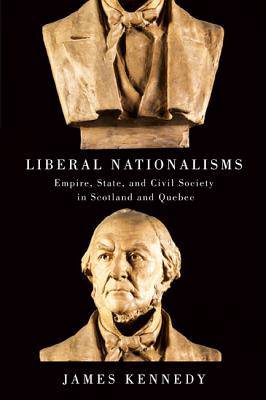
Liberal Nationalisms
Empire, State, and Civil Society in Scotland and Quebec
James Kennedy
Hardcover | Engels
€ 177,45
+ 354 punten
Uitvoering
Omschrijving
The early twentieth century witnessed the emergence of Scottish and Quebec nationalisms that were closely intertwined with liberal philosophies. The Young Scots' Society and the Ligue nationaliste canadienne carried these liberal nationalist ideas. This book offers a comparative and historical examination of their ideas and politics, exploring the Young Scots as a movement, as well as the ideas of key Nationalistes. James Kennedy argues that the growth of the Young Scots' Society and the Ligue nationaliste canadienne was largely in response to changes within empire, state, and civil society. He suggests that the actions of the British Empire and the Canadian state not only prompted nationalist responses in Scotland and Quebec respectively, but also shaped their liberal character. His comparative analysis provides insights that would not arise from a single case study of either movement, while detailing the important roles that geopolitics, consociation and federation, and organized religion played in the creation of nationalist philosophies. The first-ever comparative history of nationalism in Scotland and Quebec, Liberal Nationalisms is an insightful study of nascent political nationalisms and a major contribution to the scholarship of nationalist movements in the early twentieth century.
Specificaties
Betrokkenen
- Auteur(s):
- Uitgeverij:
Inhoud
- Aantal bladzijden:
- 332
- Taal:
- Engels
Eigenschappen
- Productcode (EAN):
- 9780773538986
- Verschijningsdatum:
- 26/02/2013
- Uitvoering:
- Hardcover
- Formaat:
- Genaaid
- Afmetingen:
- 155 mm x 231 mm
- Gewicht:
- 612 g


Alleen bij Standaard Boekhandel
+ 354 punten op je klantenkaart van Standaard Boekhandel
Cadeau

AANGERADEN


Beoordelingen
We publiceren alleen reviews die voldoen aan de voorwaarden voor reviews. Bekijk onze voorwaarden voor reviews.